
In the early morning hours of May 20, 1926, an explosion tore through a building located at 1032 West Lackawanna Ave. Miraculously, none of the nine occupants at the time were injured during the blast.

May 20, 1926
The Property
The building was owned by Frank Palutis. He, along with his wife, three children, and two boarders lived in the apartment on the second floor of the building. The first floor was home of the “European Restaurant.”
The building had a long and notorious history as a drinking establishment. Prior to Palutis owning the property, George Wuench ran a hotel and bar on the site as early as 1886. Wuench was a well-known local hotelier and barber shop owner in the area.
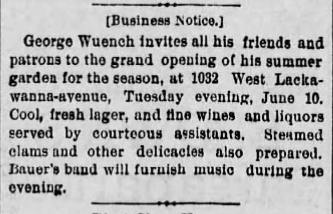
June 9, 1890
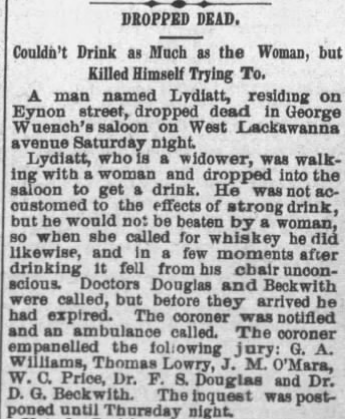
In November 1894, a man died after drinking some whiskey in the Wuench saloon.
A German immigrant, Wuench hosted his annual Clam Bakes in the garden of the property and he continued to invest in improvements over the years.
The property sustained damage in a massive fire that hit the entire West Lackawanna Avenue block in February 1899. It was alleged that Mrs. Timothy Jones had set fire to her building after threats from law enforcement to shut down her unlicensed “whiskey shop.”
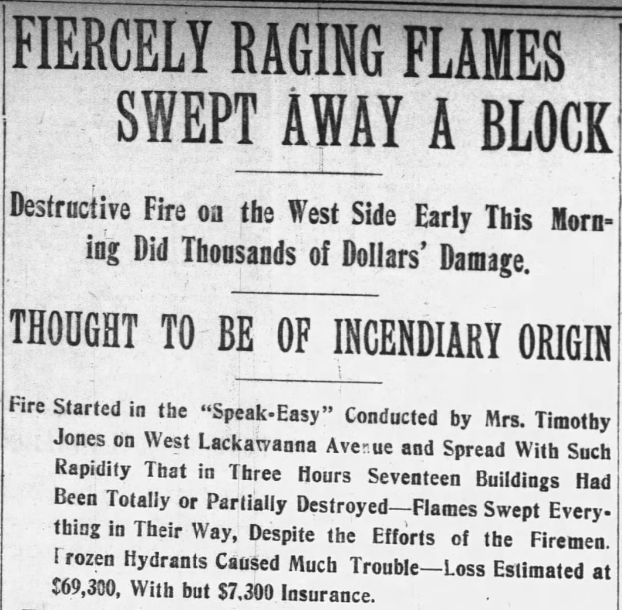
February 11, 1899
Wuench himself was fined for alcohol sales numerous times over the years. Below is just one of the instances.
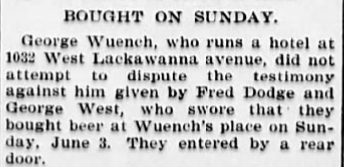
October 27, 1900
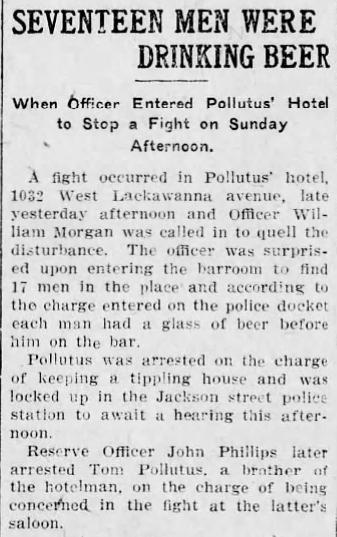
In July 1901, Wuench finally exited the business and rented the property to a couple of different tenants. In 1908, under Palutis’ ownership, the hotel was again in the news for a bar fight and illegal alcohol sales.
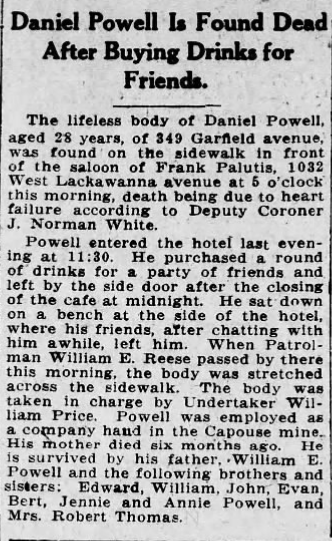
The troubles continued under Palutis when in 1913, a man was found dead after drinking in Palutis’ cafe.
In 1914, Palutis was fined yet again for keeping a “tippling house.” At the time, the business was listed as a hotel.
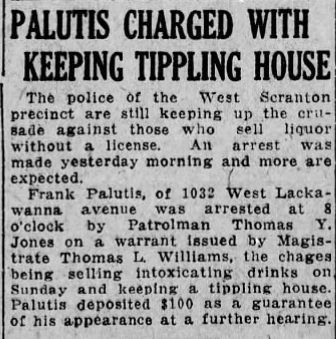
September 25, 1914
The Players
Finally, on April 1, 1926, Palutis rented the first floor of the building to two Italian immigrants – Joseph Toscano and Salvatore Mira. The two men opened a restaurant under the rather basic name, European Restaurant. And while it was formally known as a restaurant, it appears that it was informally known as “The Blazing Stump”, a place to grab a drink.
Salvatore Mira
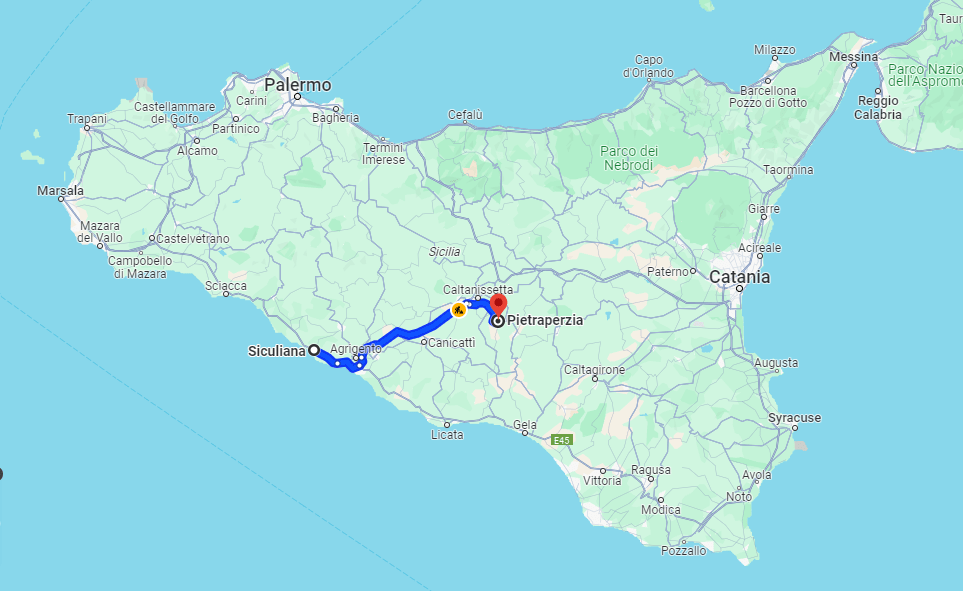
Mira lived at 912 W Lackawanna, just down the street from the establishment. He came to the US from the small seaside village of Siculiana in the Agrigento province of Sicily. Siculiana, coincidentily, is the home of Nicola Gentile and Alfred Polizzi, two mafia men from New York and Cleveland respectively.
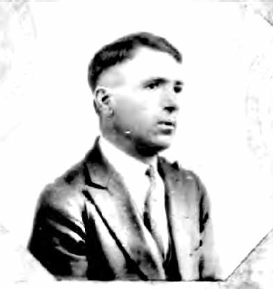
Mira married Carolina Bianca in 1918. She was the daughter of a well-known and well-respected stone mason in the area. Carolina’s brother Vicent was a member of the Scranton Police force. The couple had one daughter at the time of the blast and would add a son a year later.
Joseph Toscano
Toscano immigrated to the US from Pietraperzia, a hill town about an hour inland from Siculiana.
He settled in the Bull’s Head section of Scranton – an area that was notorious for Black Hand activity up until the early 1920s. A barber by trade, Toscano also owned and operated his own barber shop just down the street from their new restaurant.
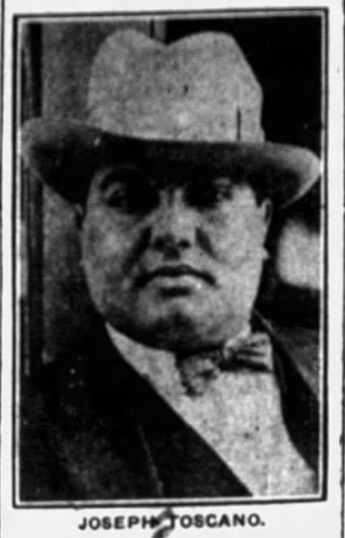
Scranton Times
May 20, 1926
Toscano was married to Domenica “Minnie” Trunzo, aka Domenica Tunis. Several Trunzo/Tunis family members immigrated to Scranton from the village of San Mango D’Aquino, Catanzaro, Calabria, Italy.
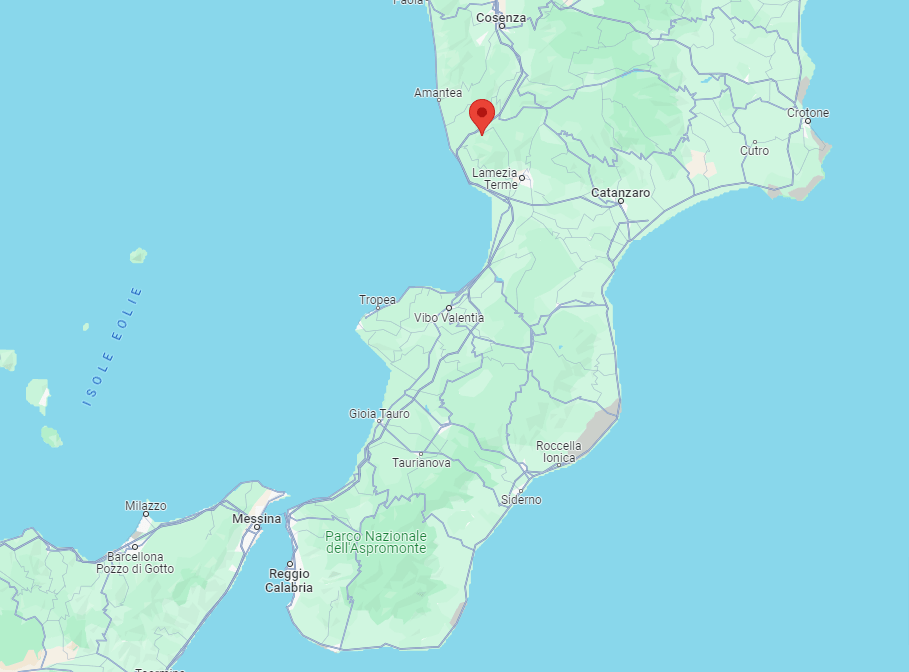
The Trunzo/Tunis name was no stranger to the Black Hand and/or violence. A couple of them were involved in incidents – though I can’t find the connection to Minnie. In one instance, I wrote about how Pietro, aka Peter, Trunzo/Tunis was sent to prison for his involvement in the death of Dominick Ferlaino. In another story, Pasquale Trunzo/Tunis was shot during an altercation in Bull’s Head.
The Explosion
Palutis was puffing on his pipe while relaxing on the second-floor balcony when the blast rang out. Glass from the window behind him rained down all over the unsuspecting owner.
A stick of dynamite reportedly landed in the entryway of the restaurant and completely destroyed the front of the building.
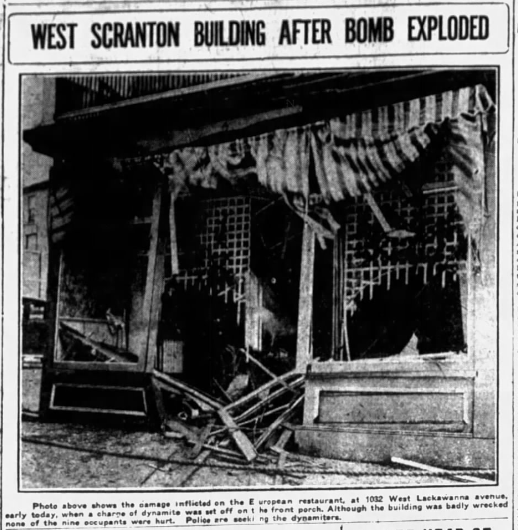
May 20, 1926
The blast shattered sixty windows of the Clark Brothers’ store across Lackawanna Ave and blew out others as far away as Main Ave.
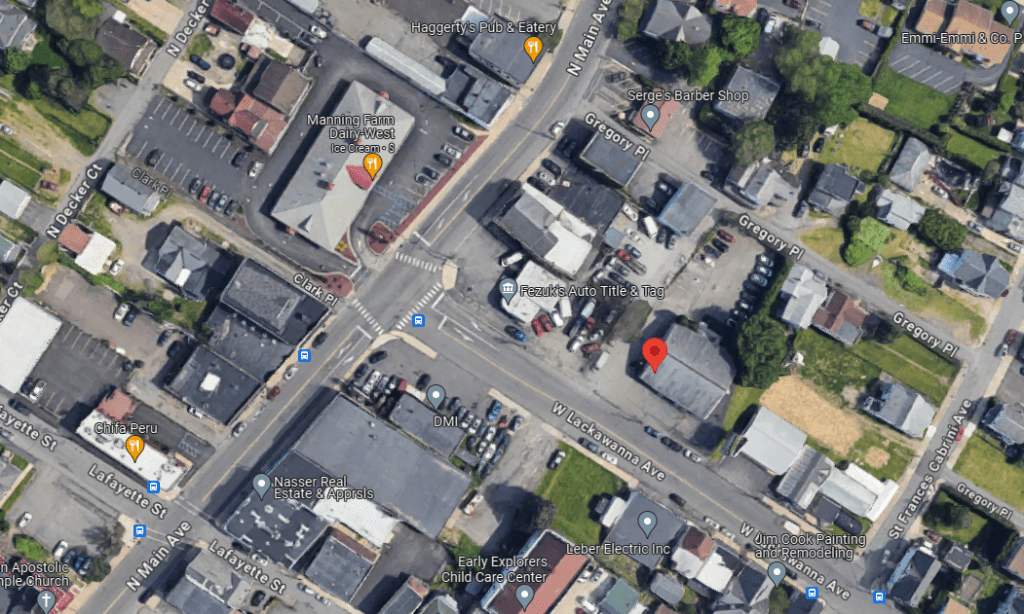
Google Maps
Toscano was inside the building at the time of the explosion along with one of his workers, Mrs. Elizabeth Knott Fralick. The two were uninjured.
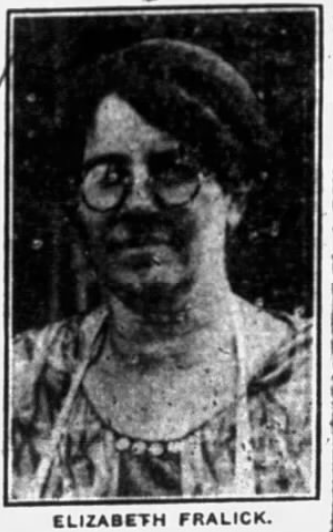
Scranton Times
May 20, 1926
The Investigation
Police and Fire arrived at the scene quickly, but the fire department was released because the blast, thankfully, did not result in a fire. The investigation was led by legendary West Scranton officer, Lieutenant Albert Gleason and included several officers from the local precinct.
It was reported that three men were seen in the area immediately before the blast – but descriptions were vague at best. Investigators fanned out throughout the area looking for the trio but were not able to locate any suspects.
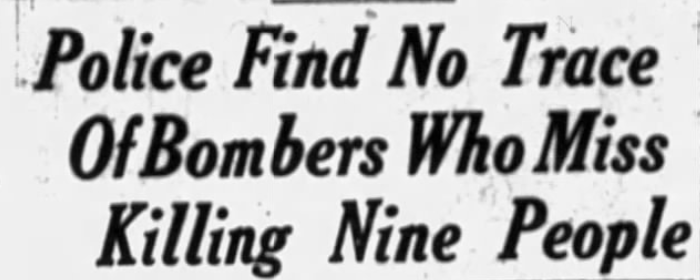
May 20, 1926
They quickly discounted the theory that someone threw the dynamite from a passing car as Palutis told investigators that “no machines” passed through the area at the time of the blast.
The Palutis building was the only building on the north side of Lackawanna Ave. All of the other buildings had either been condemned or damaged due to mine subsidence. The City had offered to buy the property from Palutis, but he refused to sell. Still, police don’t believe Palutis was the target – instead, they believe the attack was aimed at Toscano and Mira.
The blast came after a period of time when the Black Hand Mafia terrorized many businesses in the area. From the late 1800s until the early 1920s, Italians had been threatened, stabbed, and/or killed by the notorious mafia that preyed upon their fellow countrymen in the community – particularly the wealthy businessmen. The secret gang’s activities were just begining to slow down in the early 1920s. But then came Prohibition and it breathed new life into the Black Hand – and transformed the mafia. They took control of the highly profitable illegal alcohol business.
Not surprisingly, both Palutis and Toscano told officers that they didn’t have any enemies and could not imagine who might be responsible – knowing that singling out a member of the mafia was likely a death sentence.
The restaurant was in business for less than two months before the blast. It was common for the mafia to extort new businesses for “protection”, and my guess is that Toscano and Mira refused to pay.
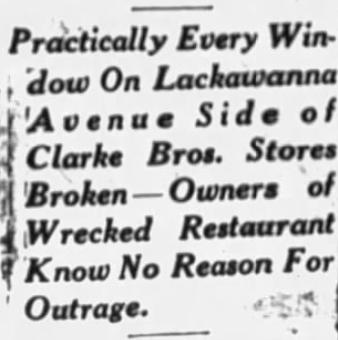
May 20, 1926
The structure suffered significant damage – particularly to the first-floor restaurant. The Times reported that “chairs and tables in the dining were smashed into kindling wood.” Several large mirrors were shattered, and the blast caused several large pieces of wood to be blown through the partition between the dining room and the bar area.
Reopening
Not to be deterred, the men apparently reopened quickly after the blast. Within five days, however, authorities raided the business again and cited Toscano for illegal alcohol sales.
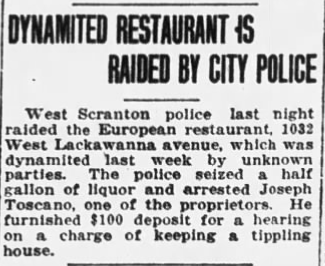
May 25, 1926
They bounced back once again and, again, just days later were cited as part of a raid on multiple “tippling houses.” This time, Salvatore Mira was cited and fined.
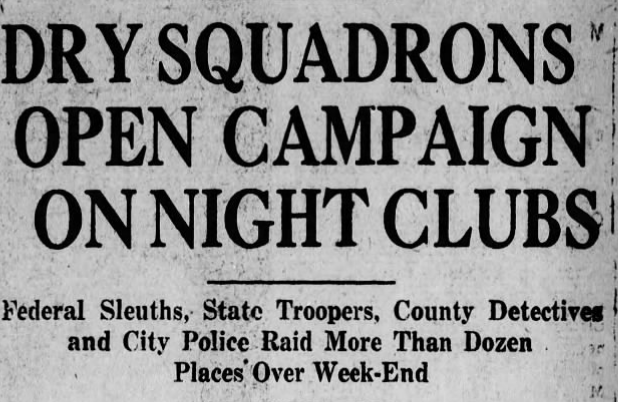
June 7, 1926
The Black Hand Wins
The two men appear to have divested from the “European Restaurant” shortly after the bombing. By 1927, Mira had moved away from Lackawanna Avenue and, by the 1930 census, was listed as a Salesman for “Dry Goods.” Some time after that, Mira opened his Fifth Avenue Linen shop in Pittston – a business he maintained until his retirement in 1959. In 1965, at age 74, Mira was suffering from a long-term illness and tragically took his own life. He was survived by his wife and two children.
Toscano continued to operate his barber shop – eventually bringing two of his sons into the business. He would eventually retire in 1947 due to illness. Toscano passed away in 1954, leaving behind four sons and four daughters.
Who Dunnit?
Even with Salvatore Mira’s brother-in-law as a police officer, there was never anyone held accountable for the damage.
A week after the bombing, another explosion took place between two houses on Clark Place, an alley at Price and Main. The location is two blocks away from the earlier explosion. Police tried to connect the two incidents but were unable to definitively tie the two together.
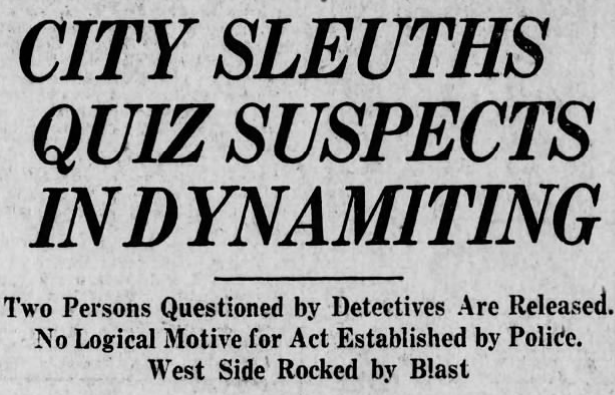
June 7, 1926
In my opinion, it’s clear that the Black Hand was responsible. A newly opened restaurant that was illegally serving alcohol was surely a target of opportunity for the mob. The two men likely tried to hold off paying – perhaps even leveraging Salvatore’s position with law enforcement to their advantage. It didn’t work. A new mafia was emerging.
Fortunately, the two would continue on and have successful businesses in spite of their losses at the Blazing Stump. They both left behind a legacy of children who ultimately carried on their family businesses.
 Exploring historic crimes in NEPA
Leave a comment