
In the early hours of Sunday, October 30, 1921, about twenty Italians were enjoying a Halloween party at the home of Dominick Pelucacci. The house, located at 1344 Dorothy St in the Tripp Park section of Scranton, also served as a neighborhood market and gathering place. In typical Italian fashion, the wine and beer were flowing.
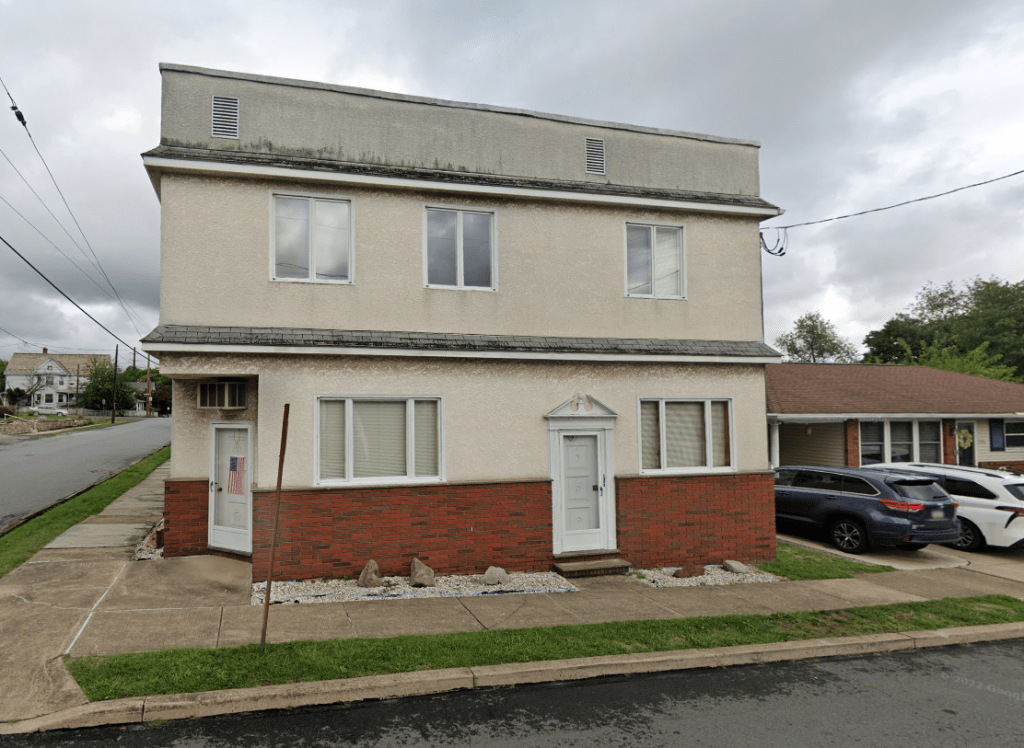
Scranton, PA
In the wee hours of the morning, two men got into an argument over the other’s hat, and the alcohol-fueled argument quickly escalated.
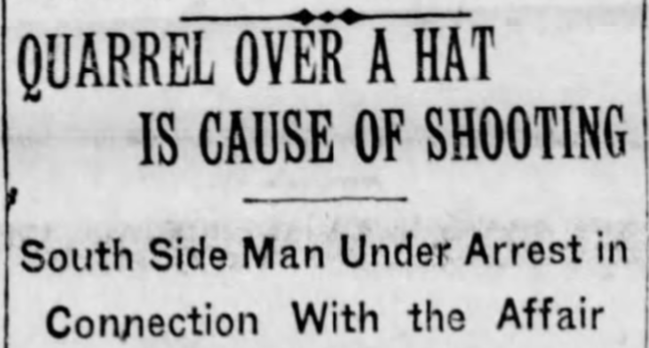
November 2, 1921
Egisto Migliosi, a 33-year-old miner, unmarried and living at 438 Decker Court, allegedly threw the first punch, landing in the face of Giuseppe Piccotti. That’s when things went from bad to worse. Piccotti, a resident of South Side, pulled a revolver and threatened to shoot Migliosi. Another man, Joseph Guzzetti, 28, also from South Scranton, drew his weapon and held others at bay while Piccotti and Migliosi continued their quarrel.
Piccotti ultimately fired two shots into Migliosi – one striking him in the neck and the other in the left chest. Piccotti took off as the stunned guests tended to Migliosi.
Before long, they moved the injured Migliosi to the West Scranton Hospital on Jackson Street. Dr. Wheelock tended to the patient and reported that he was expected to make a quick recovery.
The Investigation
The police weren’t notified of the incident until Dr. Wheelock contacted them two days later. Maybe it was because immediately after the incident, Migliosi was alert and not interested in pressing charges. As his condition deteriorated, Wheelock must have felt obligated to report the shooting.
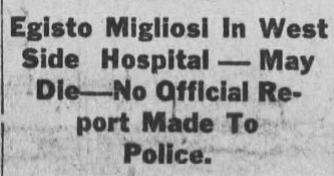
November 1, 1921
On November 2, Det. John Cartusciello, Scranton’s unofficial expert in Italian crime, was assigned to the case. It didn’t take long before Joseph Guzzetti was placed under arrest for brandishing a firearm. The main suspect, however, was nowhere to be found. The delay in reporting to the police clearly aided his escape.
A Turn for the Worse
In the early morning hours of November 5, still no sign of the suspect, Dr. Wheelock called for Cartusciello and Captain Sylvanus Savitts to come to the hospital immediately, as the prognosis for Migliosi looked dire.
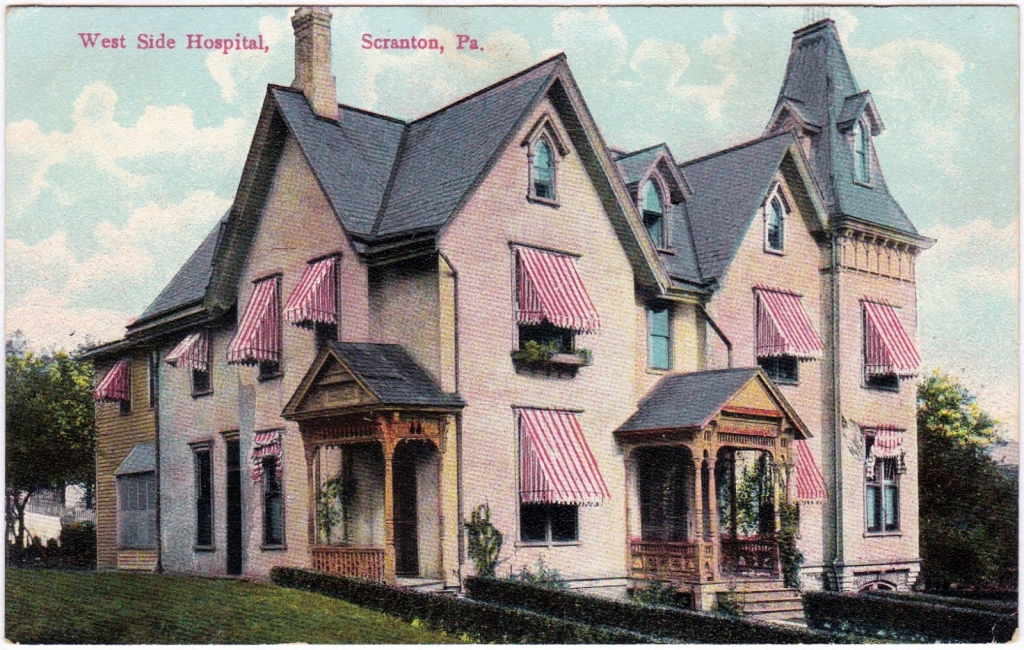
Scranton, PA
1909
When the two arrived, Migliosi recognized Cartusciello and said, “I know what you want. You have come for my last statement.” Even after being told that he did not have long to live, Migliosi told the detectives, “I’m not going to die yet.”
“I’m not going to die yet.” – Egisto Migliosi
Victim’s Statement
Egisto told the detectives that he was at the party with about twenty others and at about 1:00 am, some of the guests went outside. While outside, Piccotti grabbed him by the neck before pulling a revolver.
He added that as the other men tried to de-escalate the argument, Guzzetti pulled a gun and told them to stand back and let the two men fight it out. And that’s when Piccotti fired the shots at him.
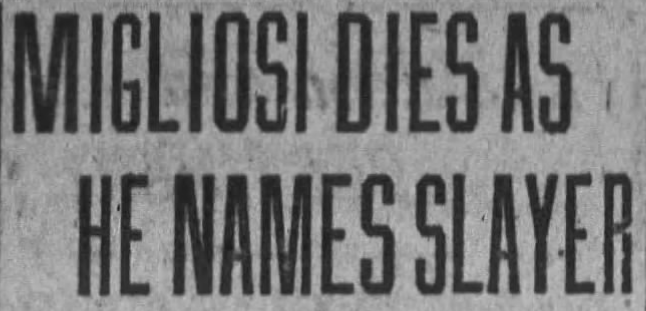
The detectives then asked Migliosi to sign the statement, testifying to the events. He grabbed the pen and signed his first name. As he started on his last name, he tensed up, clutched his chest wound, and collapsed. He died after writing just the first initial of his last name – still clutching the pen in his hand.
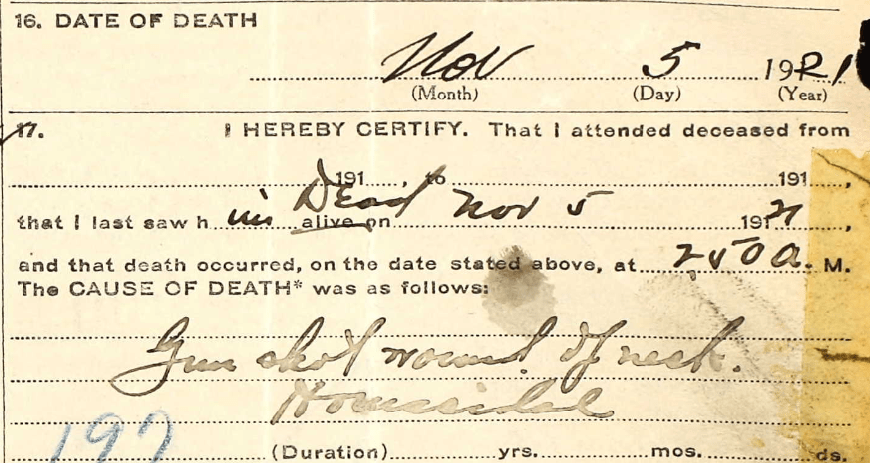
Egisto Migliosi, 33, a native of Perugia, Italy, died of his wounds at 2:50 am on November 5, 1921. He is buried at the Cathedral Cemetery in West Scranton.
He arrived in America in 1912 with just $25 in his pocket. He was said to be joining his brother-in-law, Luigi Gorietti, in Scranton. He leaves behind his parents, Leonardo Migliosi and Filomena Gubbiotti, in Italy.

April 2, 1912

April 2, 1912
Investigators now know that Piccotti is unquestionably their man. A warrant was issued for his arrest, but still, there was no sign of him.
November 5, 1921
Giuseppe Piccotti
Giuseppe Piccotti, 24, arrived in the US in 1913 at the age of 16, leaving his mother Giudetta behind in Gubbio, Perugia, Umbria, Italy. He was traveling with his uncle, Francesco Piccotti, and he was going to be with his brother, Michael Piccotti, who lived with a couple of other Piccotti families at 613/615 Genet Street.

November 27, 1913

November 27, 1913
Gubbio
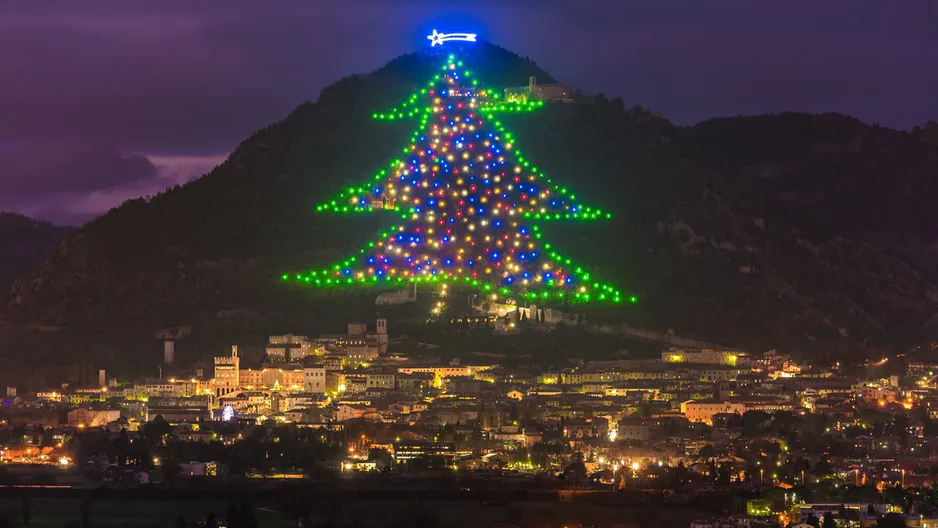
Gubbio is best known for its Roman ruins, medieval aqueduct, and sweeping hillside views. It’s also home to the “World’s Largest Christmas Tree” – an art installation that takes over a mountainside, lighting up the city around Christmas.
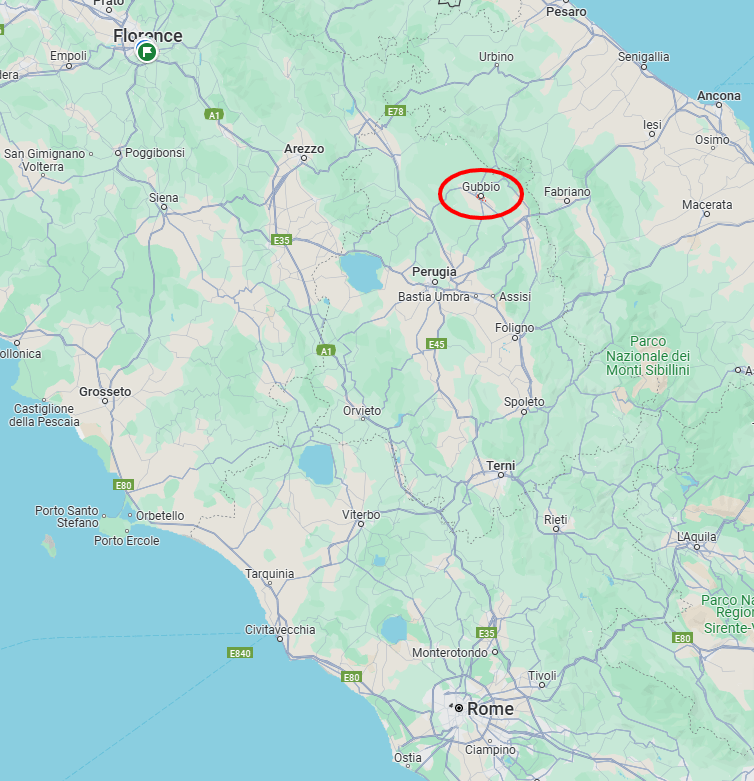
The town is also home to countless Italian immigrants now living in the Scranton area. Jessup, Pennsylvania, is a sister city to the Italian village that sits between Rome and Florence, about 2 1/2 hours by car from each city.
Each year in Jessup, the traditional “Race of the Saints” takes place – just like it does in Gubbio. Here’s an article from 1928 that describes the spectacle.
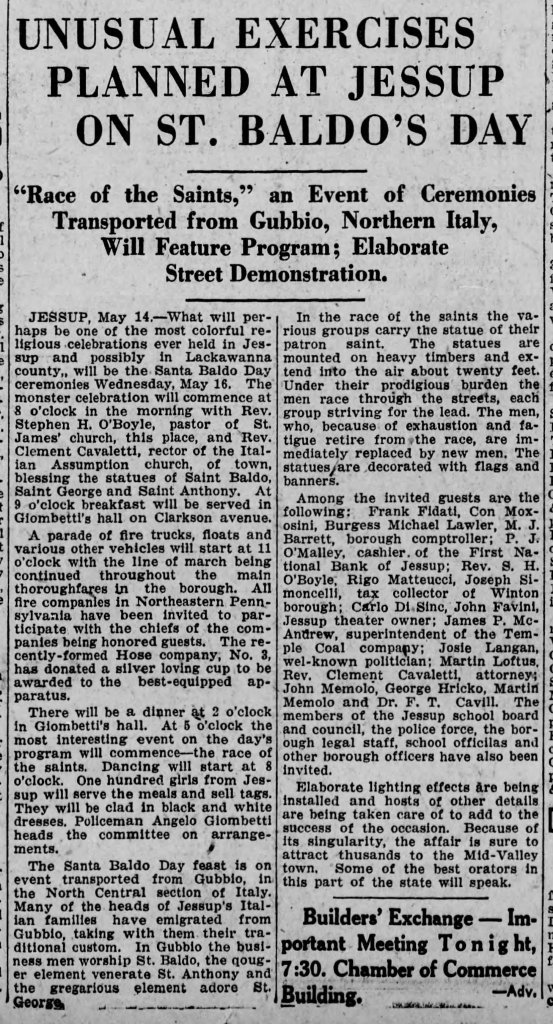
May 15, 1928
Years pass, and there is no movement on the case. Still, Scranton detectives never gave up the chase – always searching for their suspect.
Captured!
On August 18, 1927, it was learned that Scranton Detective Joseph Foderaro tracked Piccotti back to Perugia, Italy, where he opened a barber shop. He had been communicating via letters with his brother and sister in Scranton, and Foderaro knew where he was as early as 1924.
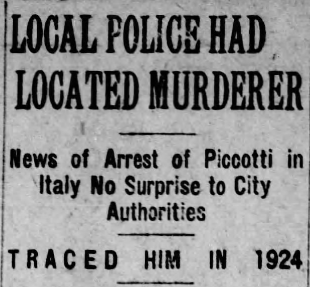
August 20, 1928
In May 1928, with the help of a private detective agency, it was reported that Giuseppe Piccotti was now in custody for the murder of Egisto Migliosi.
The detective firm knew that this was challenging and refused to travel to Italy to apprehend Piccotti unless there were assurances from the Italian government that they would agree to extradition.
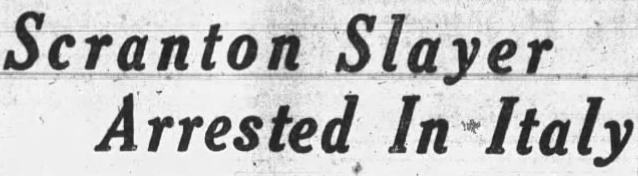
May 1, 1928
Extradition between the two countries was often difficult, if not impossible, with Italy not cooperating very often. During this period, there was a lot of tension between Mussolini’s fascist regime and the United States. Italy would normally require its citizens to be tried for their suspected crimes in Italy, as opposed to sending them back to the US for trial.
The Italian newspaper in San Francisco had more details about the incident and the arrest. They reported that Migliosi struck Piccotti with a punch before Piccotti fired his weapon. They stated that the Scranton newspapers reached out to Migliosi’s family in Perugia and provided them with information about the incident, as well as the name and description of the suspect.
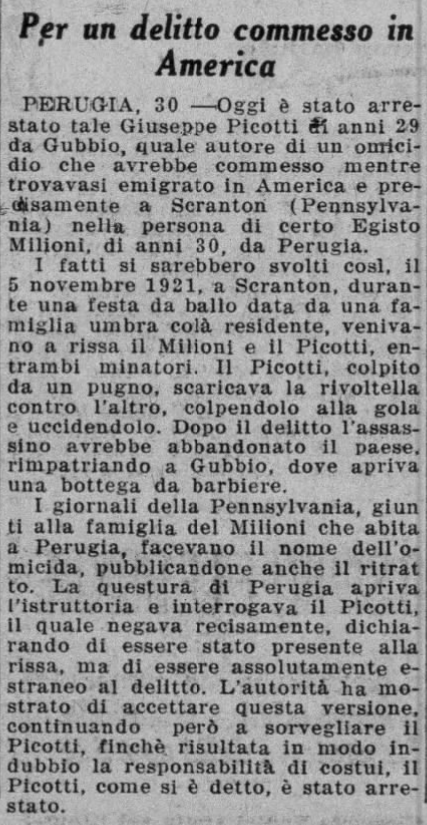
“The Voice of the People”
June 28, 1928
From there, the authorities in Perugia worked with the US detectives to detain and question Piccotti. Under questioning, he claimed that while he was at the party, he did not shoot Migliosi. With that, the local police believed his version of the story but agreed to continue to monitor him.
Testimony
Months would pass before the two countries finally agreed to hear witnesses in their respective countries. On August 8, 1928, testimony would begin in Attorney Saverio Rosato’s Scranton office. Representing the defense would be John Di Sylvestro, a Philadelphia lawyer who was assigned by Mussolini. Di Sylvestro was known as an ardent supporter of Mussolini. The former President of the Sons of Italy had been recognized for his support by the King of Italy, Victor Emmanuel III.
Over two days, over two dozen witnesses were called on behalf of the prosecution. The testimony would be transcribed and sent to Italy for their review.
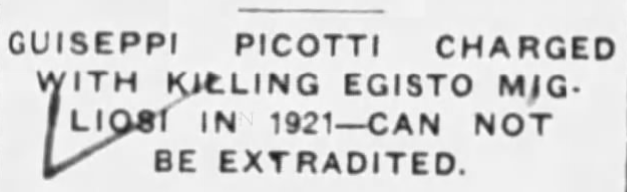
August 6, 1928
Oh no! A Cliffhanger!
After this report, the case disappears. There is not a single update as to what happened next. Giuseppe Piccotti, the best I can tell, either remained in Gubbio or changed his name before returning to the United States. I can’t find any other information on him.
What do you think happened? Did Giuseppe face trial in Italy? If so, do you think he was found guilty? Would it have been murder or some lesser charge? I have a theory, but I don’t have enough evidence to support it. Perhaps a Piccotti family member knows of this family history and can fill in the outcome.
Attorney di Sylvestro was often a target of anti-fascist violence. The most violent came in 1933 when his home was bombed, killing his wife. Mussolini would go on to recognize Mrs. Di Sylvestro as a martyr in the fascist cause.
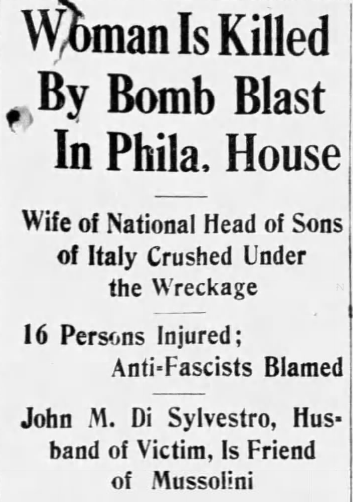
January 29, 1933
The United States and Italy eventually entered into a bilateral extradition treaty, but it wasn’t until 1983.
Share this story and let me know if you come across any updates.
 Exploring historic crimes in NEPA
Leave a comment