
Margaret Martin was an All-American girl. She was described as a “very beautiful”, brown-haired, 5’3″ young lady. Good looks, smart, kind, and a Sunday School teacher. Genuine. She graduated from Kingston High School in 1937. Just reading her yearbook quote, you get to know her – “It’s nice to be natural if you’re naturally nice.”
Margaret was heavily involved in different clubs while in school, including French, Latin, Library, Secretary, Girl Reserves, Honor Society, Home Room Vice President, Hall Aid, Yearbook Staff, and Basketball. She was proud to wear her gold class ring, engraved with her initials – with a black onyx base topped with a gold “K” and a single diamond chip.
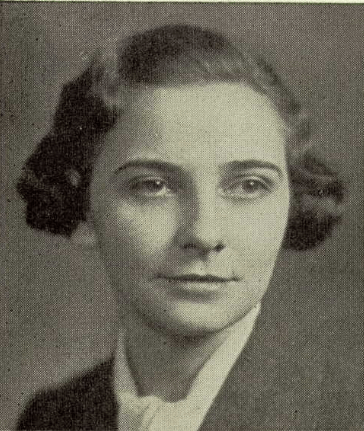
After high school, Margaret attended the Wilkes-Barre Business College (now Wilkes University), graduating with High Honors in December 1938.
Three weeks after graduating, she was seeking employment as a stenographer. Unfortunately, it was initially her business acumen that placed her in danger.
Martin Family
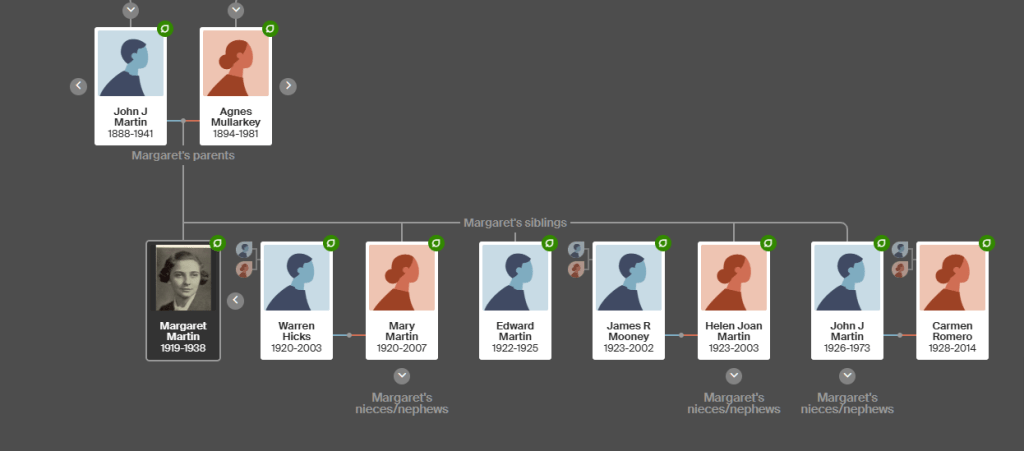
Margaret, the oldest of five siblings, lived in Kingston with her parents, John and Agnes, and the rest of her family. John Martin was a coal miner and leader of the Democratic Party in Luzerne County. Agnes, his wife, was a stay-at-home wife, raising their children. They lived in a modest home located at 43 Covert Street in Kingston, just a short block from the bustling business district along Wyoming Avenue in an area known as Kingston Corners.
The Martins faced tragedy early on in their marriage when, on December 16, 1925, their young son Edward passed away from measles at just three years old. Still, the couple stayed true to each other and had their fifth child after Edward’s death.
Disappearance
The Martins didn’t have a phone and took all of their calls at their neighbor’s home. On Saturday, December 17, 1938, at about 9:30 am, the neighbor received a call for Margaret. The neighbor went next door and summoned Margaret to the phone.
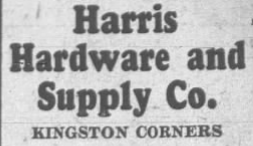
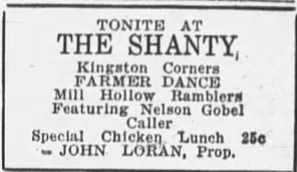
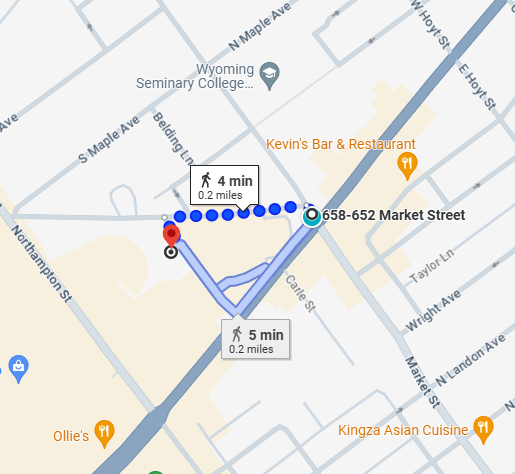
The man identified himself as “R.B. Davis” and asked to meet her about a job as a stenographer at his insurance company. This was very exciting for the recent graduate, especially during the depression. The man told her that he couldn’t find her house, so he suggested they meet at Kingston Corners, at the corner of Market and Wyoming, a bustling intersection in town. From there, he told her, he would take her to his office for an interview.
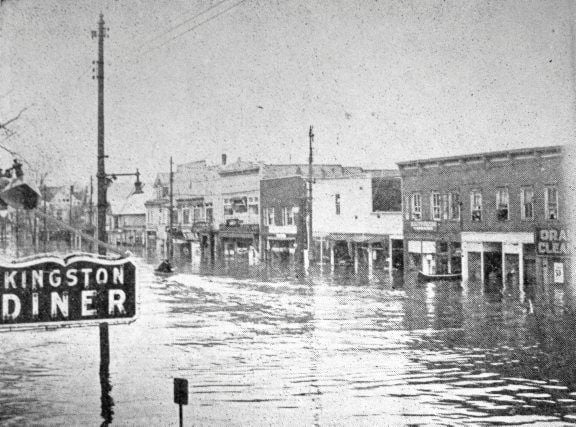
There were several businesses in the area, as well as some apartment buildings.
1938
Kingston, PA
Photo: Citizens Voice
October 3, 1938
October 1, 1938
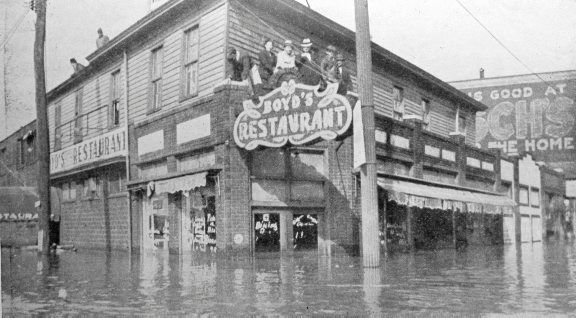
Photo: Citizens Voice
Likely thinking she would be safe at a busy intersection less than a 5-minute walk from her home, she agreed to the meeting. She told her parents that “Mr. Davis” wanted to meet with her about a prospective job and that she would be “right back.” Margaret’s parents didn’t have any concerns about the unexpected call, and Margaret left enthusiastically for her interview.
That was the last time the Martins would see their daughter alive.
The Search
Later that evening, the excitement of a job interview turned to frightening thoughts of her whereabouts. At the same time, the 13th anniversary of Edward’s death still haunted the family from the day before.
The Martins reported Margaret missing, telling detectives that she never left the home for an overnight stay. She was described as a happy and optimistic young woman with no reason to run away.
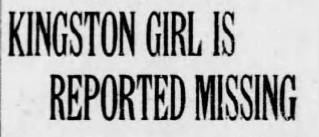
December 19, 1938
In a twenty-eight-state police alarm that was sent out, Margaret was described as “weighing 110 pounds, 5’3″ tall, brown hair, brown eyes, and wearing a brown hat, a rust-colored coat with a brown beaver collar, brown shoes, and a black sweater.” She was wearing her class ring and her mother’s diamond engagement ring. A photo was attached to the alert.
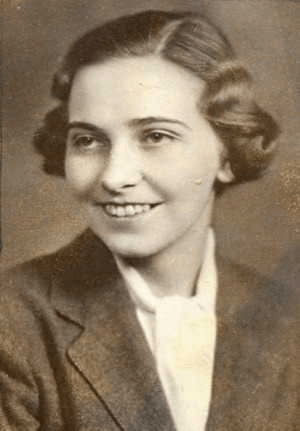
Word spread quickly. News articles were posted throughout the country, and headlines from coast to coast notified their readers.
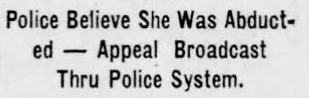
December 19, 1938
Investigators scoured the area without any luck. As news of the disappearance spread, tips poured in. Margaret had graduated from college with high honors just three weeks prior and was well-regarded in the community.
Lee Dodson, principal at the College, told investigators that he received a call from a man who was looking for graduates who might be interested in seeking employment. Immediately, Margaret’s name was at the top of the list, along with another unnamed 17-year-old girl. Dodson happily shares the girls’ contact information with the man who claimed to be “Mr. Williams.” Little did Dodson know what was about to happen.
White Slavery
One of the immediate theories was that she was a victim of “white slavery.” During this period, white slavery, today known as “Human Trafficking,” was a major concern. Criminal gangs would kidnap young women and turn them into prostitutes, forcing them to comply, earning money for their kidnappers.
The “anthracite region” was a popular target for the traffickers. They would prey on young, attractive girls, often from poor families. They would offer them a way out of poverty – a chance to make money and perhaps a shot at stage and screen. Then, after voluntarily joining the traffickers, they would be pushed into prostitution.

December 20, 1938
Three additional girls came forward and told investigators that they, too, were interviewed by a man about a stenographer’s position in the recent past. They didn’t think anything of it until Margaret’s disappearance. They all said that the man got their name from an unemployment office. The girls added that the man turned the offer into a higher-paying job as a model before suggesting a “life of crime.”
With the growing fear of this theory, the police visited every “roadhouse” and “house of ill repute” in the area searching for Margaret. At the time, a roadhouse was defined as a tavern or inn located outside the city limits, and was a place where drinking and gambling would take place. Apparently, it was also where prostitution would occur.
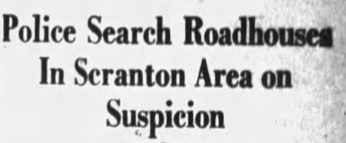
December 20, 1938
They also checked on every “sexual pervert” in the area – but yielded no results. State Police checked out several stories throughout the region. Authorities were checking leads that came in from Ashley, Wilkes-Barre, Dupont, and Larksville. In each case, women reported being accosted by men in a car or propositioned about a job.
Outside the area, tips came in from Philadelphia, West Virginia, New York, New Jersey, Maryland, and Delaware. All were investigated and were dead ends.
Margaret was nowhere to be found, and investigators are baffled by the disappearance.
The Discovery
Finally, four days of frantically searching, on December 21, 1938, they got word that would lead them to Margaret.
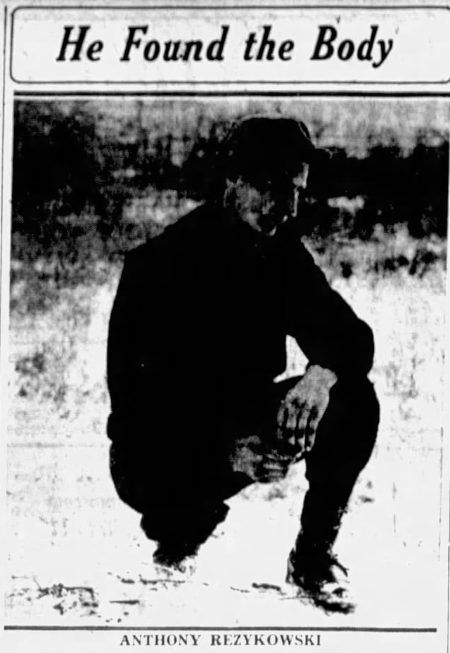
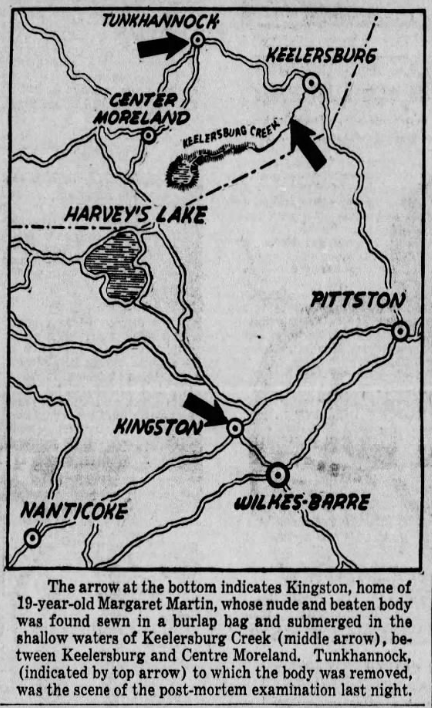
It all began with Edward Rezykowski, 16, who lived on a farm in Eaton Township. Eaton is the area just west of the Susquehanna River, south of Tunkhannock. While out walking on Sunday, December 18, Edward saw large muskrats near a footbridge that crossed over the Keelersburg Creek in North Moreland Township. The area was just south and adjacent to Eaton Township. He told his brother Anthony, 19, about the varmints so he could go hunt them.

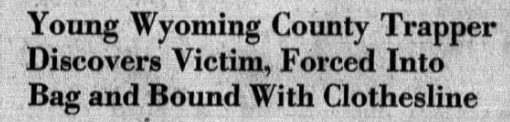
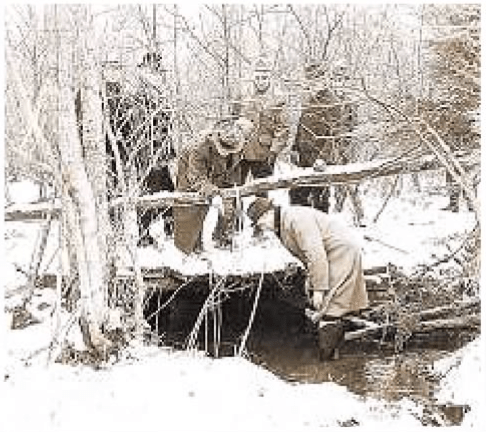
Anthony and his friend, Stanley Shalkoski, also 19, went in search of the rodents on Wednesday, December 21, 1938. The area was covered in freshly fallen snow. As Anthony approached the footbridge, he made a gruesome discovery. He saw a hand that was popping up out of the water. It was coming out of a burlap bag that was sitting in the middle of the creek.
December 22, 1938
He summoned Stanley to the discovery, and the two poked the bag with a stick until they realized what they had found. Frightened, the boys ran to the home of Anthony’s neighbor, John DeGraw, a school teacher in Wyoming County. From there, DeGraw notified the Tunkhannock coroner of their discovery.
December 22, 1938
Soon, the authorities arrived to find a burlap bag almost completely submerged in three feet of water. The top of the bag had been crudely sewn together with a coarse twine. Inside, a nude, dead woman. Her legs were bent up to her chest, and a clothesline was used to hold them in place.
She had severe injuries on her body. The area above her eye was badly bruised – a forceful blow from a rock was the initial theory. She had deep cuts from a knife across her abdomen and above her knee, making authorities believe her assailant planned on dismembering her. And finally, she had bruises and fingerprints around her neck. Strangulation would ultimately be ruled as the cause of death – but it was not without a fight. Under her fingernails, there was skin from her assailant. Evidence that she didn’t go quietly.
Sunday Times (reprint)
January 19, 2014
Officials looked for the ring that she always proudly wore to help identify her, but it was nowhere to be found.
However, a mole on her leg confirmed her identity as Margaret Martin. The search was over, but the investigation now begins.
The Area
Northmoreland Township was described as very remote and about 16 miles away from where she had met her captor. The coroner was quoted as saying that she was found only by accident and that she “may have been there for twenty years” had the trapper not stumbled upon her.
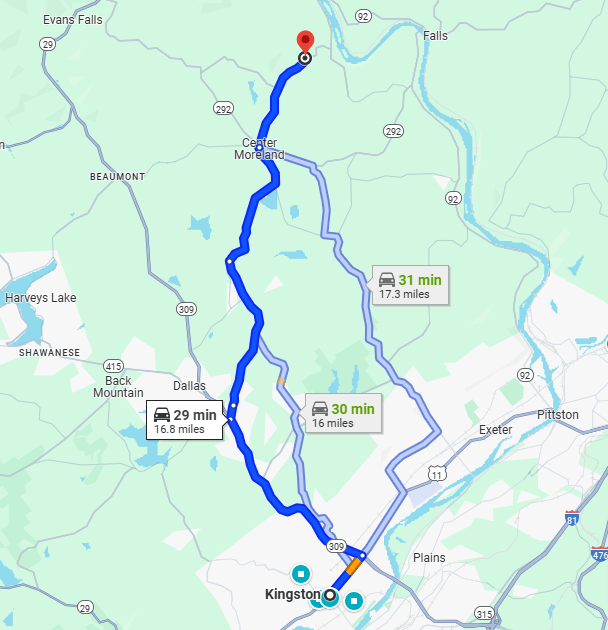
Her body was found about 300 feet away from a dirt road, what is now called Creamery Rd.
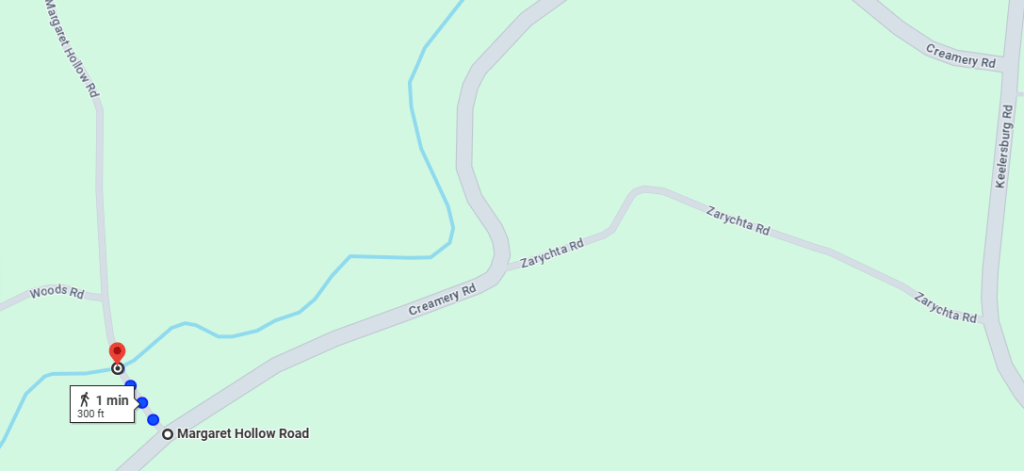
At the time, the long-forgotten road was deemed impassible by vehicles. It was believed that the man had to park his car along Creamery Rd and then drag the body approximately 300 feet to its destination.
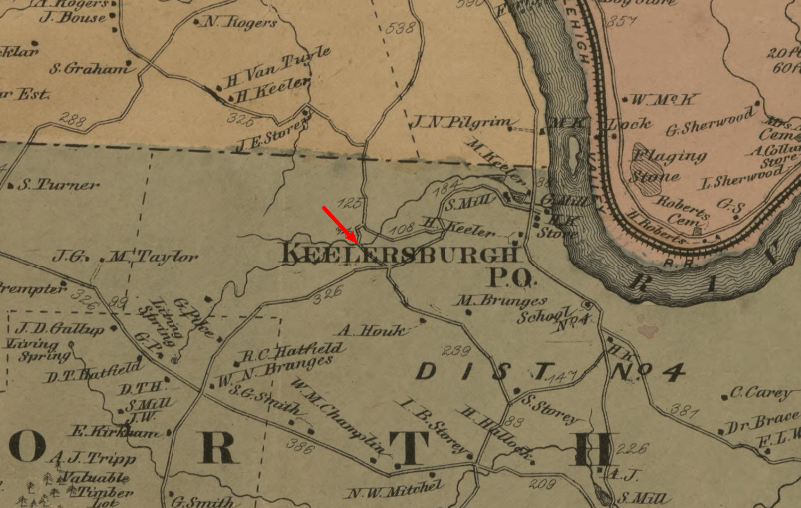
In this map, dated 1869, you can see that there was a road in that area as early as 1869, but it had long been abandoned.
December 22, 1938
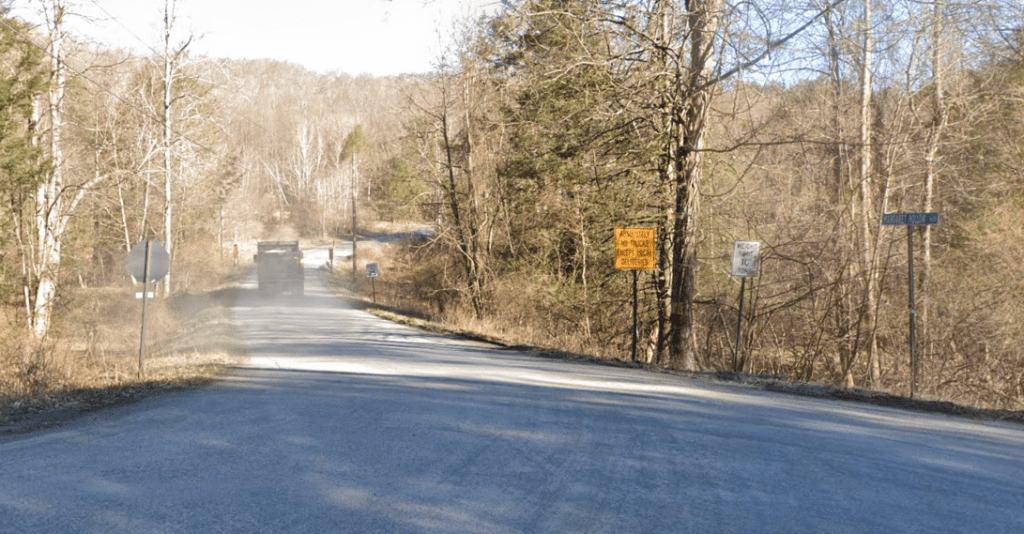
In the years since the discovery, improvements were made to recover the roadway, and several homes were built in the area. Today, it bears the name Margaret Hollow Road in honor of the victim. Thanks to Google Streetview, you can see a truck, driving away from Creamery Rd, that is about to go over the bridge above what’s now called Martin Creek, where Margaret was found.
The Investigation
Investigators started looking into leads as soon as they were notified of her disappearance on Saturday evening.
State police picked up a suspect in Wilkes-Barre the day after the disappearance. The man had been involved in similar cases on three different occasions. It was rumored that this man had girls come to his office and have them disrobe before the girls would finally leave. The 23-year-old male was heavily questioned but later released. Major William A. Clark was the commander of the Wyoming Barracks of the State Police and acted as the lead investigator. He said that the man had established a firm alibi.
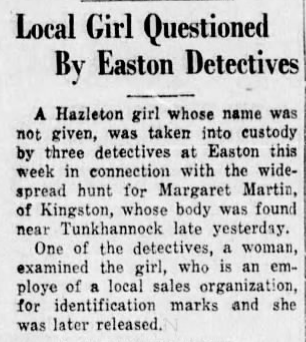
Friends and family said that Margaret would never get into a car with a strange man. That led investigators to think that there might have been a woman involved as well. Based on that theory, detectives detained a female suspect from Hazelton. A female detective was brought in to examine the suspect, looking for identification marks, but the woman was later released.
December 22, 1938
Mr. and Mrs William Agrafiotis told police that they saw a man at Kingston Corners on the day of the disappearance. He was about 26 years old, and they saw the man talking with a woman who matched the description of Margaret. The two talked for a couple of minutes, then they got into a 1937 or 1938 black coupe and drove off.
Evidence from the Scene
From the scene, detectives focused on the burlap bag and the clothesline. Benjamin Lee, a “hemp product expert,” was charged with finding the origin of the two pieces of evidence. It was reported that a previous case was solved using this method, and they hoped for similar results this time.
The coroner pegged her time of death between 10 am and 4:30 pm on Saturday, the day of her disappearance. He also commented that she had a cheese sandwich in her stomach. Considering she didn’t eat before she left home, detectives checked with several restaurants in the area to see if they had seen Margaret.
The suspect placed Margaret into the bag and sewed it shut. This led investigators to believe that she was not murdered nearby. She was likely killed somewhere else in the area and then taken to this remote area to be dumped. Based on this, they expanded their search radius.
The Sawmill
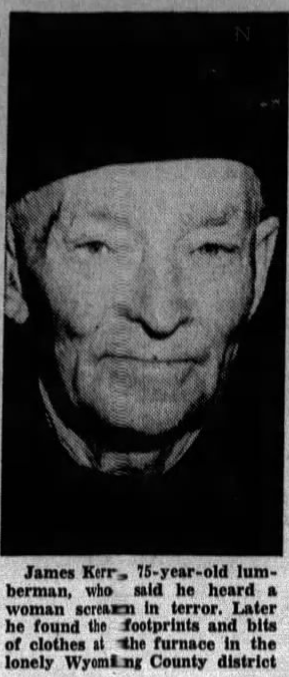
Investigators received a call from James Kerr, a 65-year-old mill owner who was said to live about four miles north of Forkston. That would likely put the location of the sawmill just below County Rd 4002.
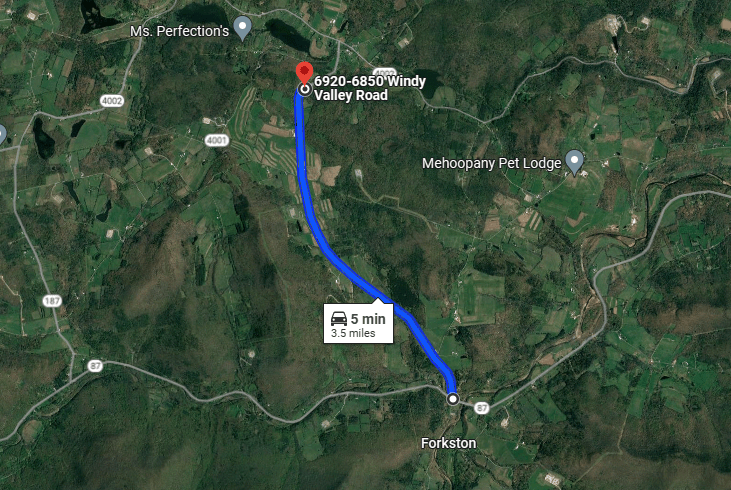
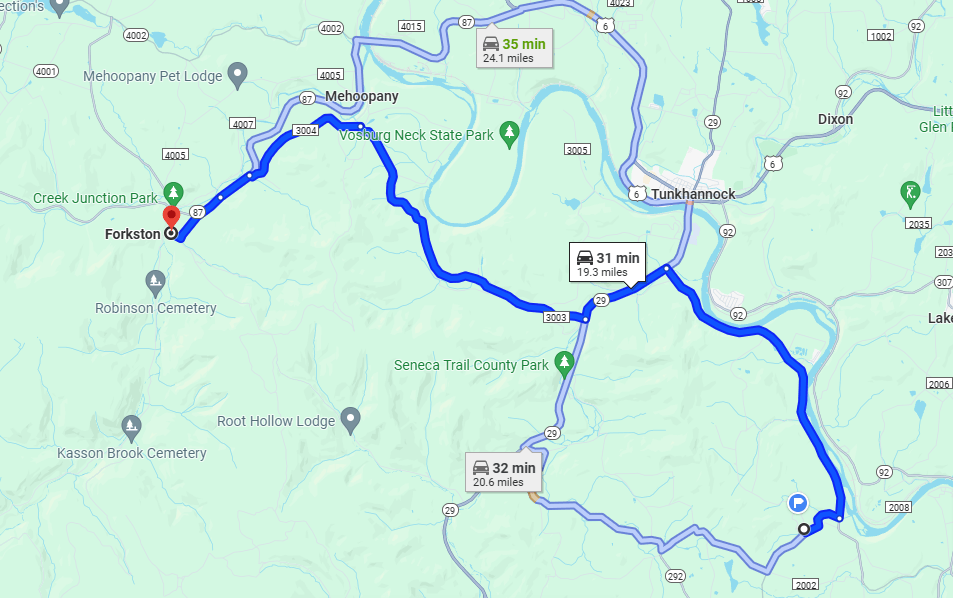
I haven’t been able to find the exact location of the Kerr property, but the town of Forkston sits about 19 miles northwest of where Margaret was found. There was some confusion about the exact location of the mill. In one article, it said it was four miles north of Forkston, and in another gave this description of the location: “100 yards east of a rural road. Running parallel with this road is a high deer fence, also running parallel and to the west, a short distance away, is a trout stream popular with fishermen. The mill is about 700 feet from the Luzerne Rod and Gun Club. The mill is located on the James B. Champlin estate. It is about three miles south of Forkston.”
The area was described as being well-stocked with game and fish and popular with anglers and hunters, with several hunting cabins dotting the hills.
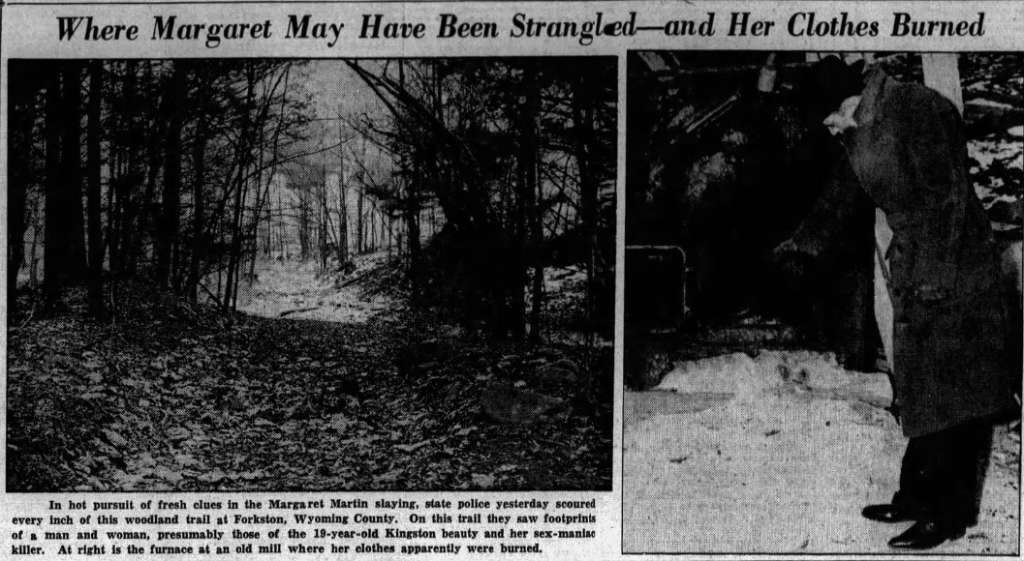
Kerr told the police that on the night of December 17, he looked across his fields and saw a glow coming from the furnace of the nearby sawmill. He said he saw a man putting something in the furnace. He said it was an unusual activity in the evening, so he fired two rounds in the air from his rifle to scare the man away from the mill.
December 30, 1938
The shots were heard by the deputy game warden, Manville B. Wells. Wells initially thought the shots came from poachers, so he went to investigate. He made his way to the Kerr home and arrived about 30 minutes after the gunshots. There, James told him what had happened and said his wife would not let him go to the sawmill alone. After some discussion, the men grabbed a pair of rifles and went to the sawmill together to check things out.
As they approached the mill, they found tracks of what they thought were a man and a woman and evidence of a struggle about 50 feet from the furnace. From there, they noticed that only the man’s footprints led away from the mill and towards the woods, along with what looked like something heavy had been dragged alongside. They also saw a set of fresh tire tracks.
Inside, they found a roaring fire – even though the workers had left hours earlier. Knowing this was out of character, the two men checked the steam gauge and noted that it was much higher than normal, as well as 120 psi vs the normal 15 psi.
They knew something wasn’t right, but because of a newspaper strike, they were not aware of what had happened in Kingston. When the news finally spread, and they were made aware of the missing Margaret, they notified the State Police – but this wasn’t until December 29.
When investigators arrived at the sawmill, they found a piece of cloth near the mill. It was speculated that it was from Margaret’s dress or coat.
When they sifted through the ashes of the firebox, they found several pieces of metal. Some of which looked like either ornaments or buttons from what might have been Margaret’s clothing.
When detectives interviewed Kerr, he told detectives that he had heard a woman screaming that night as well.
December 30, 1938
Detectives were also told of a car that was parked at a nearby hunting lodge that overlooked the sawmill. A witness reported seeing the strange car there on the evening of December 17 and again the next morning. The vehicle belonged to a man from the Wilkes-Barre area, so detectives put the man under surveillance.
At this point, it was believed that the man had taken Margaret to the sawmill and planned on cremating her. His plans were interrupted by Kerr, and he took off. He then went to a tannery near Noxen, where he stuffed her into the burlap bag before dumping her in the creek.
The Burlap Sack
After a few days, investigators believed that they had traced the origin of the burlap sack. The bag was originally used for poultry and dairy feed and sold by GFL Mills in Buffalo, NY. That lead took them to Claude Crispell’s Feed Store in Noxen and the A.C. Devens mill in Dallas. The two locations are just west of where Margaret was eventually found.
Detectives questioned both Crispell and Devens, along with several customers of each store. – knowing that these two stores were the only ones within a 25-mile radius that would have that bag. It was reported that Crispell confirmed that the bag looked like one that they sold. Still, no further advances were made in identifying a suspect, and Major Clark downplayed the lead.
The Funeral
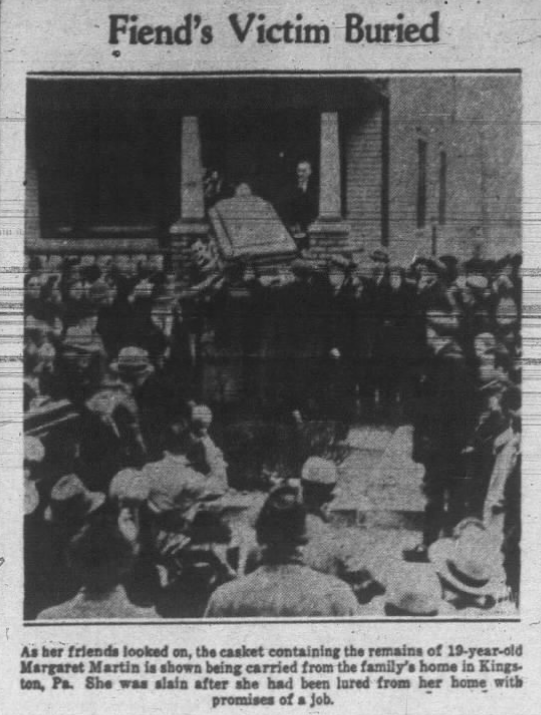
During Margaret’s funeral, her father broke down and claimed, “When the slayer is identified and captured, it will be a man all of us have known.”
December 27, 1938
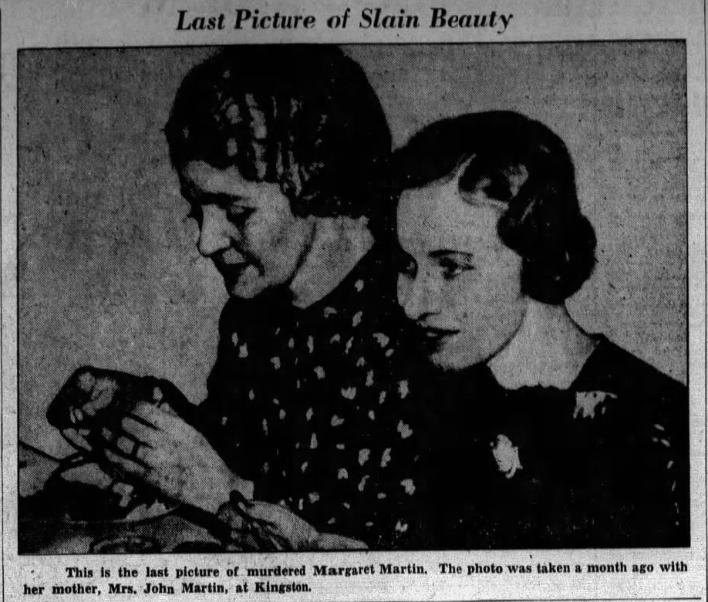
On the day of the funeral, the Scranton Tribune printed the last known photo of a vibrant Margaret.
December 24, 1938
Still Unsolved!
The murder would go unsolved to this day. Hundreds of leads poured into various police agencies, and every one of them was tracked down. Dozens of suspects were interrogated by authorities, and yet not a single one was able to be brought to trial.
In January 1941, Pennsylvania State Police Commissioner, Lynn Adams said, “Somewhere in our investigation…we slipped up on an alibi, and the going is getting harder and harder.” He added that he believed they interviewed the killer, but “We failed to break someone’s story…that’s all.”
I have to believe it’s rare for a rapist and cold-blooded murderer to have only one victim – and just stop raping or killing. Maybe, just maybe, one of the suspects they had on the radar committed crimes later in life.
Here’s a list of men who were interrogated during the initial investigation.
People of Interest
Gnall & Terplywitz
On December 26, 1938, two young men from Taylor were arrested and put in jail for assaulting an 18-year-old North Scranton woman. It was reported that the girl was on her way home from St. Ann’s Monastery when two men, John Gnall and John Terplywitz, offered her a ride. The girl knew one of them as a patron at the restaurant where she worked, so she accepted.
The men had other plans. The woman claimed the two took her to Elmhurst Boulevard and raped her. She told police that when she refused their advances, they reminded her of what had happened to Margaret. After returning to the city, she claimed the two men raped her again.
The two men faced separate trials and were both found guilty. Each man was sentenced to five to ten years in jail.
While it’s unlikely that the two men were involved in Margaret’s case, invoking her name during the attack likely didn’t help their case.
Jack Vickers, aka Stewart Duane
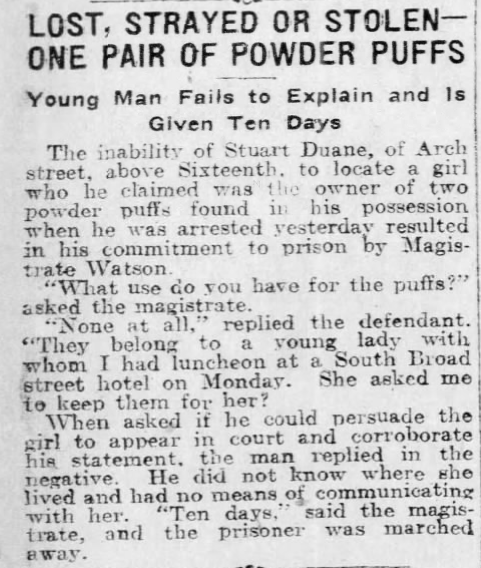
On December 27, 1938, a Philadelphia-area man, Jack Vickers, was picked up on a parole violation in Philadelphia and brought to the old Moyamensing Prison at 11th and Passyunk. He was found to have a list with the names of 25 girls, some from the Luzerne County area. When interrogated, he told the warden that he got the list from a man named “Edwards” and “knew who killed the Martin girl.”
Vickers, aka Stewart Duane, was then transported to Wyoming County, where he accompanied police on a search around the sawmill. During the tour, authorities said that he gave them a “fantastic story” about how he helped the killer. However, after the tour, they believed he had nothing to do with the murder, and he was sent back to an Atlanta prison for his parole violation.
There was no reason given as to why he would confess to something he didn’t do. There was a record of a John Vickers who was serving time in a Philadelphia prison for sodomy, and this article is likely about the same man.
October 10, 1917
Richard Mitman
Richard Mitman was born in 1916 in Bethlehem, PA. His father was a “prosperous businessman.” During Richard’s senior year at Liberty High School, he took off for several months and visited Big Spring, Texas, where he taught photography and journalism. After high school, he went on to college to study engineering.
While living in Cincinnati, he married Melba Decker, of Cincinnati, on Feb 3, 1938, when he was just 21, and she was 24. Against his father’s wishes, he dropped out of college to support his new wife. He was reportedly working for a telegraph company in Washington, DC, while Melba was back in Cincinnati.
On April 1, 1938, he was reported missing from his home in Cincinnati and was expected to travel to Pennsylvania. In June of that same year, Melba filed for divorce. She was granted her request in October 1938.
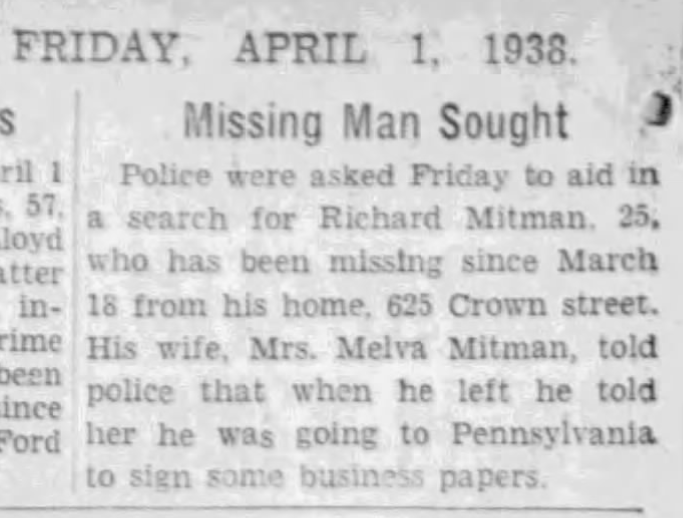
April 1, 1938
Richard was later quoted as saying that, after Melba filed for divorce (April 1938), “I worked my way down to Mexico and from there to South America for work in the oil fields.” When he finally earned enough money to return to the US, he learned that Melba’s divorce was granted (October 1938). He was also quoted as saying that after his divorce from Melba, “I went haywire then; I didn’t care what I did.”
On December 27, 1938, Richard was picked up by federal agents in Philadelphia after an anonymous tip claimed that he was a gun-runner for the McKesson and Robbins drug firm (now McKesson Corporation). During this time, the McKesson and Robbins scandal was making headlines as one of the largest financial scandals of the 20th century.
The tip was reported to be a hoax, believed to be perpetrated by Mitman himself, but when searched, he had a list with the names and addresses of 125 women. This prompted investigators to consider him a potential suspect in Margaret’s death.
Mitman was interrogated for the murder, but he claimed he got the names from want ads he had posted in newspapers looking for models and filing clerks. He said he did it to “prove that it was easy to handle women.”
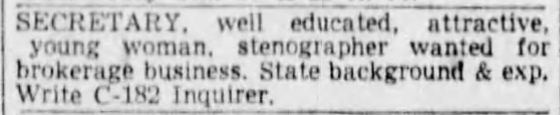
Philadelphia Inquirer
September 11, 1938
After some questioning, he was dropped as a suspect in the murder but was sent to prison for a year on a vagrancy charge – essentially for causing problems for investigators.
Still, his comments seemed haunting. He was quoted in an April 21, 1940, Philadelphia Inquirer article as saying, “Good appearance is a great asset. It’s surprising how many persons take you at your face value.” Could that have been his strategy to lure Margaret?
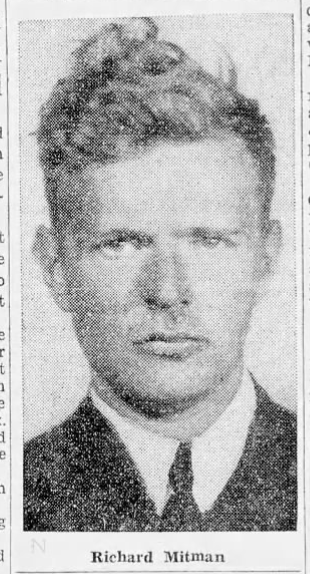
December 21, 1938
Richard was a conman. He worked at a rooming house as a waiter to earn his room and board. Then, in the evenings, he was wined and dined by salespeople as he acted like an agent for a South American company that was sent to the US to buy a fleet of trucks. He admitted that he was in it just for fun.
In March 1940, he was arrested for the con and would serve another six months in prison.
Mitman would later move to California, where he was convicted of sex crimes with model Inga Borg. Borg claimed that she posted an ad for a model who was looking for work. Mitman responded to the ad and agreed to hire her for $750 per month to pose for pictures. He took nude photographs of her, then tried to extort her into providing him with 72 virgins in exchange for the 72 photos he had taken of her.
He was known to move from town to town and was convicted of at least one sex crime before his 1953 conviction in Los Angeles. In 1949, he was convicted of molesting a young girl and served a 20-month sentence.
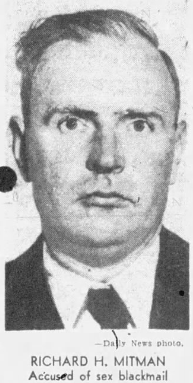
November 7, 1952
Could he have been the killer?
Lyle Merithew
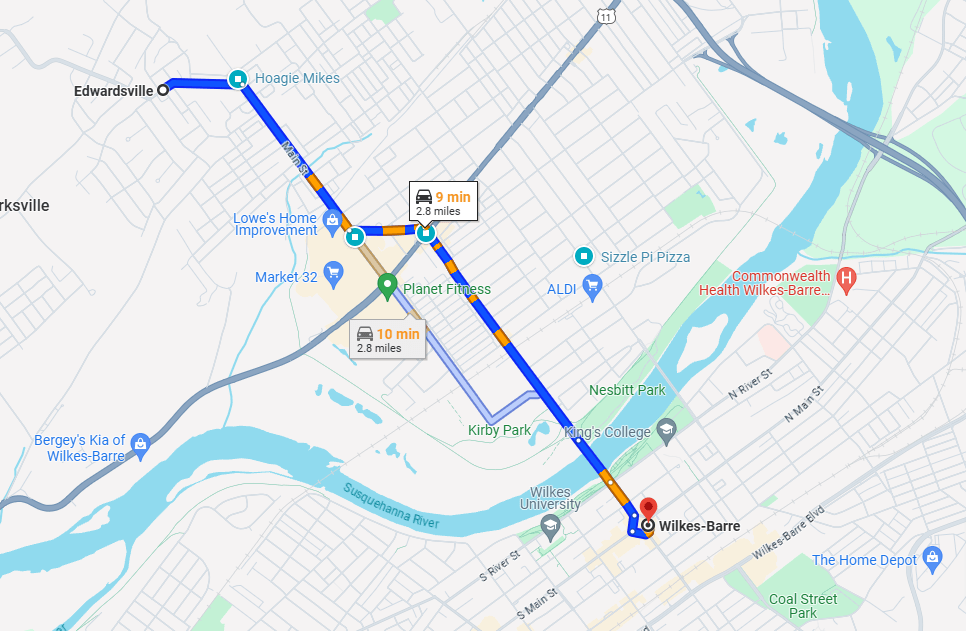
Just two weeks after Margaret’s disappearance, on the morning of December 30, 1938, Kingston Police went on a high-speed chase in pursuit of a man who was alleged to have tried to pick up two young girls in his car. With everyone in town on high alert, the girls contacted Wilkes-Barre police after they were solicited by a man as they waited for a streetcar in Edwardsville.
The man tried to lure the girls into the car to give them a ride, but they refused and later took the streetcar to Wilkes-Barre. When they got off in Wilkes-Barre, they saw that the man had followed them. He tried to entice them into his vehicle again. The girls refused and notified Wilkes-Barre police of the incident – providing them with the description of the man, the car, and the license plate.
Kingston Police Officers Fred Hinkle and Joseph Pilcavage saw the vehicle in the city and blew their whistle in an attempt to stop the car. The man ignored the command to stop and kept driving. The officers immediately gave chase.
The man, later identified as Lyle W. Merithew, 32, took off heading north on Wyoming Avenue towards West Wyoming – his home. The high-speed chase led officers to fire their service weapons sixteen times to try to stop the man. Finally, near the Wyoming Monument, the police forced Merithew’s car into the curb, where he was brought to a stop. Officers tried to detain Merithew, but he allegedly resisted – leading one officer to beat him with a blackjack so badly that Merithew ended up in the hospital under police guard.
Upon inspecting the car, police found a bloody knife and thought they had their man.
When he was healthy enough to answer questions, it was apparent that Merithew was NOT their man. The knife and blood were from a deer that he had recently bagged. He was cited for disturbing the girls and dropped as a suspect.
Three years prior, Lyle also killed a deer, so it supports his claim as a skilled hunter.
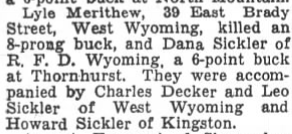
December 5, 1935
Lyle would go on to marry and didn’t appear to show up as trouble in later years. Was it just a false alarm? Did Lyle have good intentions that were just misinterpreted by girls on edge? Was he interested in one of the girls as a potential love interest, and did he try to pursue her? Or did he go too far, or have bad intentions?
The two Kingston Police officers were removed from the force within two weeks. Their conduct on the chase and detention cost them their jobs.
Robert Bartell
On December 30, 1938, Robert Bartell, 28, of West Scranton, contacted the police and said, “I know a lot about the murder of Margaret Martin.” He appeared “very nervous” and said he saw three men acting suspiciously around a fire in the woods near the Cathedral Cemetery on the city’s West Side. He said one was definitely Anthony Rezykowski, the young man who found Margaret’s body. The other was Anthony’s friend, Chester Visniski. One of the men had a burlap bag, and they were studying a newspaper article about the murder.
Major Clark dismissed the lead, saying that Anthony’s only connection to the case was that he found the body.
Mystery Man
While investigators searched for clues with the burlap bag, they were also keeping an eye on a Springfield Township farmhouse. The home was about five miles from where Margaret was found. The property belonged to a man who allegedly tried to lure 18-year-old Cassie Kevac into a vehicle.
Kevac was registered with the unemployment office, and a man, claiming he was from Bloomsburg, came to her home to offer her a job. He said he got her name from the unemployment office – along with references. She thought the offer seemed legitimate, but she declined to go in his car with him.
She reported the name, description, and vehicle license number to the police. The description was said to match that of another witness who allegedly saw a man on a telephone at Kingston corners the day of Margaret’s disappearance.
No further information could be obtained about this suspect.
Peabody Salesmen
Investigators were looking for two men who allegedly tried to lure a 16-year-old girl into a hotel room for a job interview. When things turned sexual, the girl escaped.
She described the men as being about 35 years old and well-dressed. When investigators went to the hotel, they found that the men had registered under an alias.
Major Clark commented that white slavery rings were using salesmen from legitimate businesses to lure their victims. Even still, he dismissed the link to the murder.
Marranca and Falcone
Margaret’s case also brought back memories of a double murder from eleven years prior. In that case, Jennie Monica, 19, and Edith Fonza, 20, were shot to death – likely by their double dates, Sam Marranca and John Falcone.
In June 1927, Marranca, 24, and Falcone, 23, went on a date with the two young girls. The two girls apparently denied the advances of the men and, as a result, were brutally murdered. Each was shot, then stabbed, their bodies left in a field in Pittston.
The two men went on the run and were never captured, nor faced justice. Marranca had been a suspect in the rape and murder of Jennie Visato, another area woman. He was also a suspect in the death of another man during a bar fight.
Could it be one of them returned to the area to commit this murder? Coincidentally, Major William Clark of the Pennsylvania State Police was the lead investigator on that murder as well, serving at the time as Captain.
Herbert W Goddard Jr
In February 1940, reports surfaced that a man named Herbert W Goodard was under arrest for another murder in Florida. He was accused of luring Frances Dunn and Jean Bolton into believing that they could become movie stars.
Goddard raped Dunn, then butchered her with a knife because she “was nervous and raising hell” after the attack. Bolton escaped and immediately called for help, which led to his quick capture.
He was the son of a prominent construction engineer whose family moved around often. His parents divorced when he was young. Herbert moved to California with his mother and her new husband, but was sentenced to prison for desertion from the military. He escaped prison at the Presidio in San Francisco and returned to Pennsylvania.
Goddard was known to police in Pennsylvania, as well as throughout the country. He was convicted of raping a 13-year-old girl when he was just 17. He served a ten-year sentence for the rape
Goddard was found guilty of 1st-degree murder and was promptly sentenced to death by electric chair. He openly confessed that he murdered Dunn, but made no mention of Martin.
Orban Taylor
In September 1942, Orban Taylor, a 21-year-old man originally from Wilkes-Barre, but now living in New York City, made a confession to police that he was the one who killed Margaret. Taylor was dishonorably discharged from the Army at Fort Jay, New York, and had served 18 months in the military prison there.
He also pleaded guilty to charges of abducting a 14-year-old girl and was accused of several other petty crimes.
Taylor was interviewed by Major Clark and others, but his story fell apart when he couldn’t tell them what he did with Margaret’s clothes. It was believed that he had read about the murder in a detective magazine, in which the disposal of clothing was not discussed.
Taylor was sentenced to prison for his role in the abduction of the 14-year-old. While serving his time in Elmira in 1944, he mixed a “cocktail” that included orange juice, sugar, water, and typewriter cleaning fluid. He shared the cocktail with two of his inmate friends. All three men died. Orban thought the cleaning fluid was alcohol, but it was actually a poisonous fluid.
Legislation
Wilkes-Barre State Senator Leo Mundy took action and was scheduled to introduce a bill in the State Legislature. The bill would make sex crimes a capital offense that would require offenders to register with the State. Doctors and other social workers would also be required to report persons with such tendencies.
Once registered, they would be required to undergo periodic exams – and if found to have strong tendencies, would be placed in mental institutions.
Mundy would go on to say, “Doctors are now required to report contagious diseases. They should also have to report sexually ill persons who are a menace to the community.” He was clearly ahead of his time.
Today
Over time, the case had moved away from the national headlines and was relegated to small articles on the inside of the local newspapers. Around the anniversary of her death, newspapers would recount the tragedy in hopes that the killer might come forward or that new evidence could be found.
The last of Margaret’s siblings, Mary, passed away in 2007. Still, several living nieces and nephews would take comfort, knowing justice was served to honor Margaret’s legacy.
If you have any information that might help this case, contact the Pennsylvania State Police Tip Line at 1-800-4PA-TIPS or 1-800-472-8477.
 Exploring historic crimes in NEPA
Leave a comment