
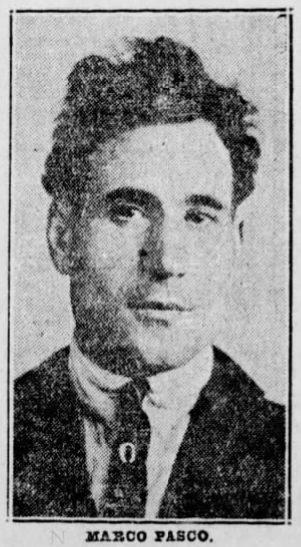
Shots rang out in North Scranton on the morning of December 18, 1928. Marco Pasco left his home at 461 Oak St just after 6:00 am to go to work in the mines. The short half-mile walk down Oak Street and across the Lackawanna River to the Von Storch Colliery normally would take about 15 minutes.
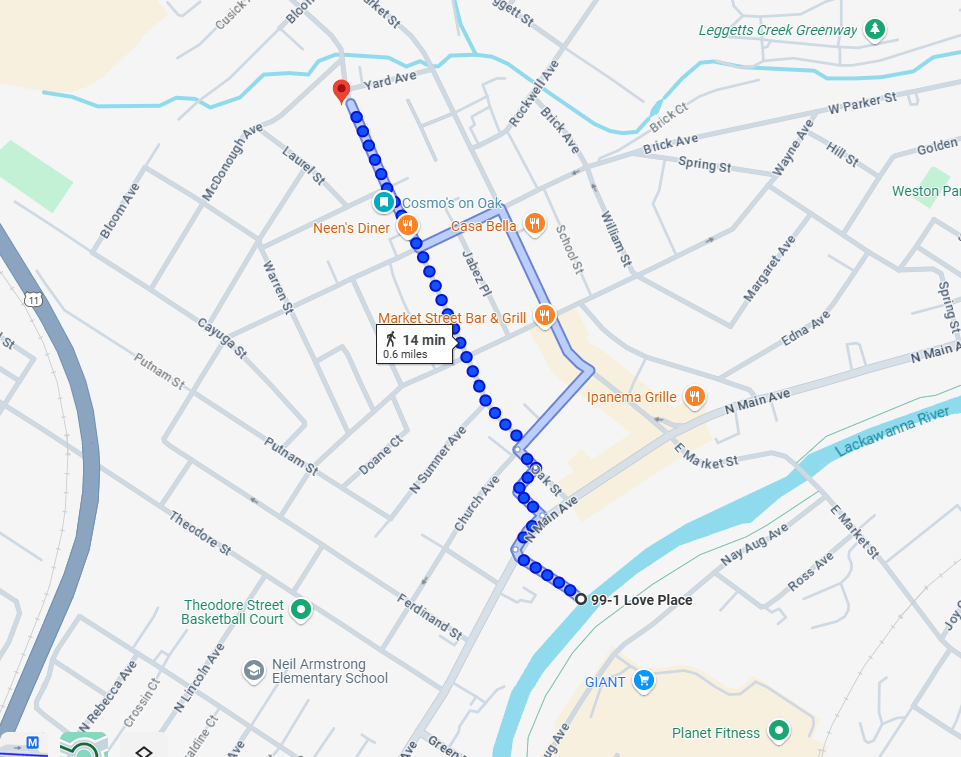
He made it just two hundred feet before a car slowly approached. Then, they unleashed a barrage of bullets toward the unsuspecting husband and father of nine. Police estimated that eight or nine shots were fired at the man. Only two bullets struck their intended target, but it was enough to drop Pasco in his tracks.
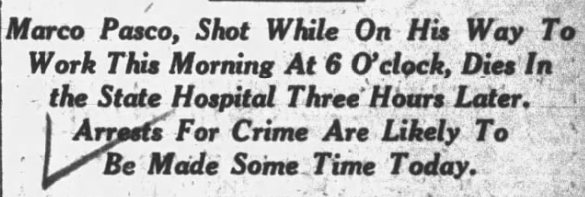
December 18, 1928
Help arrived within minutes and rushed the injured man to the State hospital. While there, police investigators questioned Pasco. They knew him from earlier incidents of violence and tried their best to get him to name the suspects. Pasco refused – insisting he did not know the men.
Before they could convince him to name the men, Pasco died just three hours after arriving at the hospital. This was a result of two gunshot wounds, seemingly through the same wound to the abdomen.
Marco Pasco
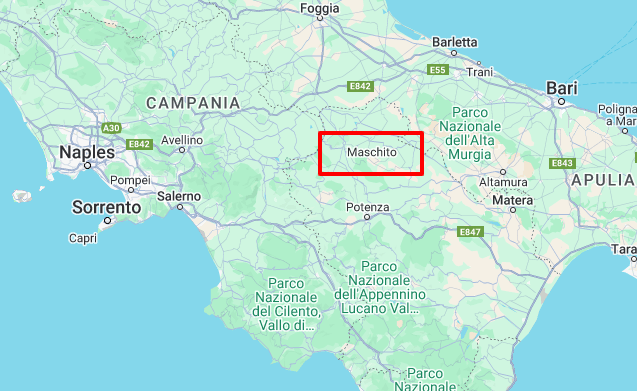
Pasco was born Marco Posca on August 7, 1888, to parents Francesco and Santa Pasco. He immigrated to the United States from Maschito, Italy. Maschito is a village in the province of Potenza in the Basilicata region of southern Italy. It’s primarily known for agriculture, including olives and grapes.
When he arrived in June 1903, he was just 14 years old. Passenger records can not be found, so I could not determine with whom, if anyone, he was traveling.
He originally settled in Jersey City, New Jersey, where he met and married Elizabeth “Lizzie” Valla/Vahli. There, they started their large family together. The pair had nine children together starting with Susan in 1912, and ending with Catherine in 1927 in Scranton.
Very few Posca family members immigrated from Maschito. I can’t verify if any were related to Marco. Marco did travel back to Maschito in February 1925 to visit family.
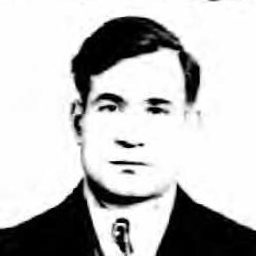
Passport Photo
January 21, 1925
Marco’s Violent Past
This wasn’t the first time Marco was involved in violent attacks. In fact, he had been arrested several times before.
Weapons Found
The first arrest happened in November 1918 shortly after he and his family moved to Scranton. In that incident, Marco and Joseph Archer, aka Giuseppe Archiero, were involved in a fight. When officers arrived, the two men were found to have illegal guns and knives in their possession.
Pasco was a contract miner and was said to have up to thirty men working for him at one point. Archer was allegedly one of his employees.
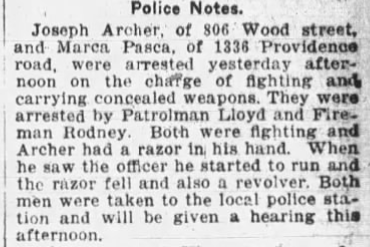
November 12, 1918
Ironically, Joseph Archer also acted as a witness for Marco in his Naturalization process.
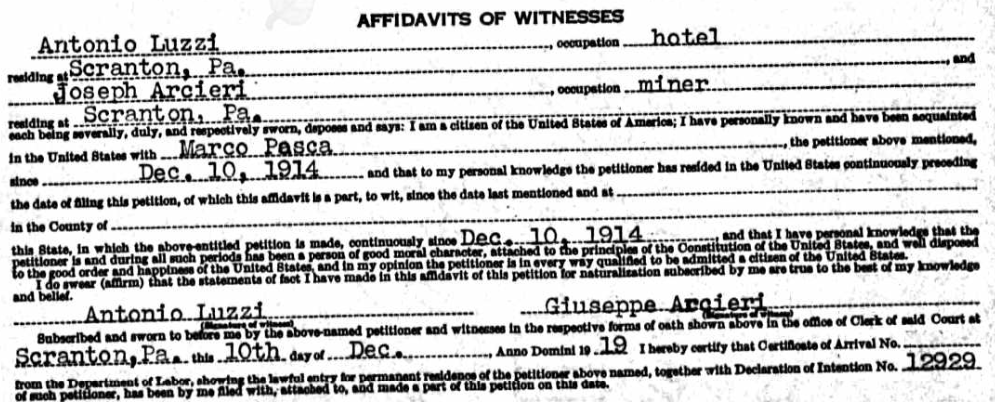
Family Feud
In October 1921, the Pasco and Archer families were now neighbors, living at 1336 Providence Rd. The Pascos lived in the rear of that address. Investigators believed that Archer wasn’t happy with something one of the young Pasco boys had done. Archer was seen slapping the boy – likely Frank, who would have been about eight at the time. Lizzie saw Archer hitting her son, and she jumped in to assist. She pulled a knife and slashed Archer in the head and neck. The wound was so large that it required twenty stitches to close.
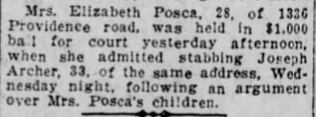
October 28, 1921
Lizzie faced discipline for her actions, resulting in heightened tensions between the two families.
Shots Fired
Less than a month later, the feud escalated. This time, Marco shot Archer. This was the result of an alcohol-induced argument while walking along Main Ave with several friends.
Archer was hospitalized in critical condition with a single gunshot wound to the chest – the bullet piercing his bladder.
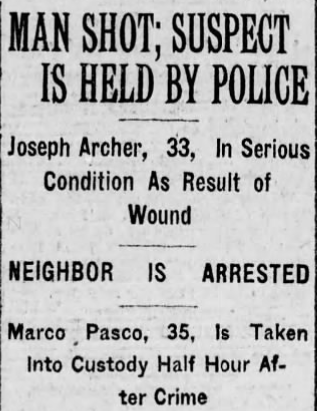
November 24, 1921
Witnesses say that the men were arguing as they walked along Main Avenue. Tempers flared and a shot was fired – but did not strike anyone. The argument continued as they made their way along Main Avenue. Then, a couple of blocks later, another shot was fired that dropped Archer.
Two weapons were found, each with one bullet missing. Investigators believed that the gun that fired the bullet that struck Archer belonged to Archer. But doctors said it was impossible to remove the bullet from Archer without killing him. Hence, they couldn’t know for sure which weapon caused the injury. They would have to wait until Archer either recovered enough, or died, before they could extract the bullet.
Witnesses claimed that Archer was more intoxicated than the others and started to wave his revolver. That’s when Marco said he was simply trying to take the gun away from Archer when it discharged. He claimed Archer had shot himself. Given their violent history, investigators didn’t believe Marco.
November 30, 1921
Marco was jailed days while awaiting the outcome of Archer’s injuries. Fortunately for Marco, Archer recovered. But unfortunately, they managed to extract the bullet. They determined that it came from Pasco’s Colt automatic.
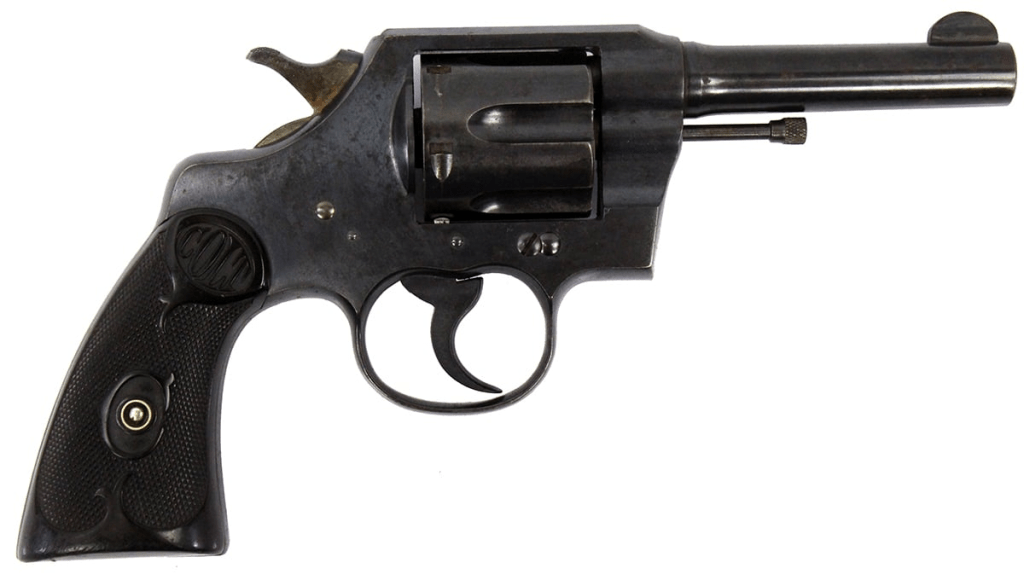
Based on all of this, he was charged with “felonious wounding” and was eventually released on bail.
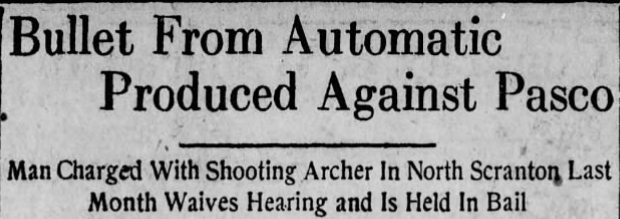
December 23, 1921
June 1922, Pasco appeared before Judge Maxie for sentencing but was promptly released after paying all costs. Archer was said to have made a full recovery.
Slashing in West Side
By August 1923, the Pascos were living in West Scranton. Tensions within the Italian community were building again. This was a result of the murder of Vincent Gallico/Gallo. He was murdered by Tony Morella – a friend of Marco.
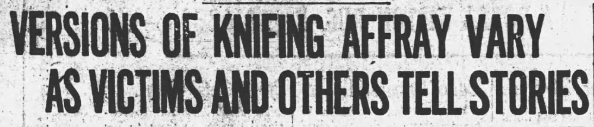
August 16, 1923
After the murder, Marco ran into Frank Caro, a friend of Gallic’s, at a bar in West Side. The two men argued and a knife fight broke out. Several people were involved, including Marco’s wife Lizzie. She suffered a slash across the cheek and neck and was taken to her home for treatment.
While they were tending to Lizzie, cries from another woman were heard. Some of the crowd ran to the home of Mary Gallo. She was the brother of Frank Caro. They found her lying on the floor in a pool of blood.

August 16, 1923
Doctor PJ O’Dea quickly stitched her up and she identified her attacker as Marco Pasco.
These types of fights were typically ignored by the police. Those involved preferred to keep it out of the legal courts and abide by the street code. One witness called the style of justice, “Get your man.”
The community wanted to hide the argument from law enforcement. However, there were two women involved who required medical attention. The authorities were called. Both Pasco and Caro were arrested and taken into custody.
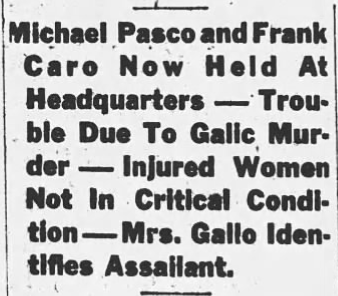
August 17, 1923
Workplace Violence
In January 1924, a work-related quarrel turned violent when a man lashed out with a knife at Pasco. Marco being the seasoned street-fighter he is, dodged the attack and the man struck his friend instead.
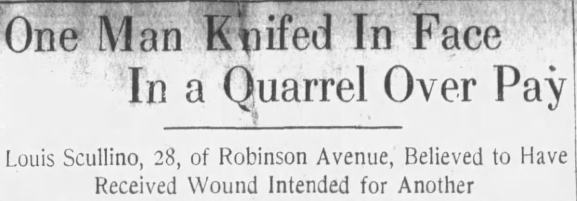
January 16, 1924
Graycar Shooting
Just two weeks later on February 1, 1924, Pasco was arrested again for another shooting. This time, his target was Andrew Graycar. And yes, alcohol was also involved.
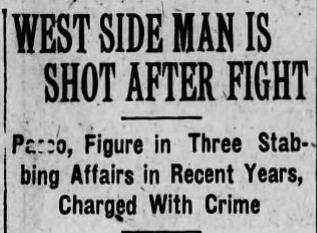
February 1, 1924
It was pay day for the crew from the Von Storch mines. Afterward, Pasco, Graycar, and two other men went drinking in downtown Scranton. The four men walked to the Pasco home in West Scranton. Marco wanted to introduce the men, likely his crew, to his wife.
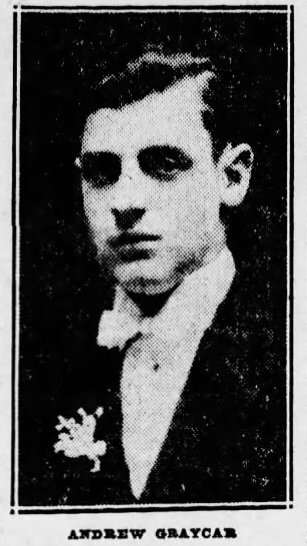
February 2, 1924
The party continued at the Pasco home until Marco asked Graycar if it was true that he was a fighter. Graycar affirmed and the two men got into a playful fight. Graycar got the best of him. Pasco did not take the beating well. He pulled his weapon and shot Graycar in the groin.
Graycar would recover and Pasco would be sentenced to “felonious wounding” yet again. He served five months of his ten-month prison sentence – the judge citing his wife and family’s destitute situation. He was set free in July 1924.
You can see that Marco lead a violent life. He likely created many enemies along the way. Any one of these instances could have played a role in his death. Investigators had their hands full with potential suspects.
The Murder Investigation
With several violent instances in the past six years, police knew Marco and his checkered past. They also were aware of the many enemies he had. They interviewed Lizzie, but she was tight-lipped and they believed she knew more than she was willing to share.
December 19, 1928
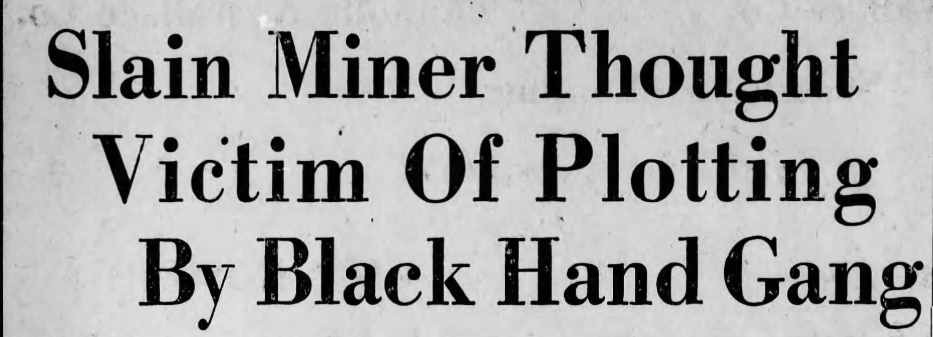
Two young women were near Marco when he was shot. They were shaken, but not hit with gunfire. Another witness, off-duty police sergeant John Lewis lived across the street from Pasco. He heard the shots and rushed outside only to see a car speeding away. With eyewitnesses, the police announced they expected a quick close to the case.
They believed there were several men involved in the attack. Their initial investigation said there was a driver and at least two shooters. This was clearly a targeted attack.
Marked Man
Police believed Marco was a “marked man.” They learned that a gray touring car had been parked near his home all evening the night before. A man had been pacing in front of his house for hours in the early morning hours.
As soon as he emerged, the car drove slowly toward him and opened fire once they were upon him.
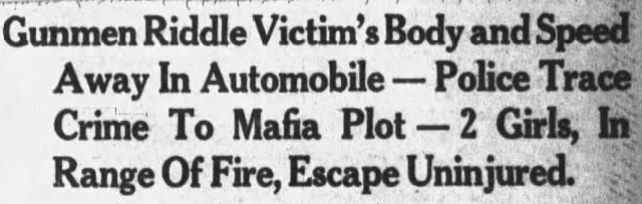
Investigators were running with a Black Hand theory in the beginning of the investigation.
December 18, 1928
Two Men Held
Police detained two men in connection with the shooting. Pietro Sirianni and Pasquale Gallico, aka Gallo, were brought in for questioning.
Pietro Sirianni
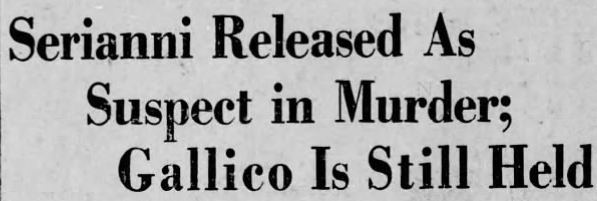
Serianni, who lived at 1119 Blair Avenue, worked in the Von Storch mines – the same as Marco. He failed to show up for work on the day of the murder. After intense questioning, he was released.
December 21, 1928
Pasquale “Patsy” Gallico
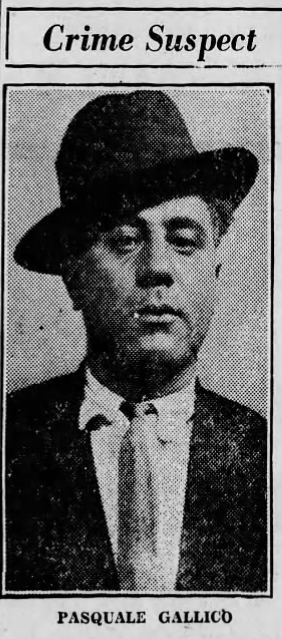
Gallico has not worked in some time and could not answer how he makes his living. He lived at 906 Scranton St. That’s the same area where Vincent Gallico was murdered by a friend of Marco’s. I have not connected the two Gallicos, but I believe they may have been brothers.
Pasquale was detained twice before on suspicion of murder. In one instance, he was said to have visited Johnstown and shortly after his arrival, a murder occurred. Then he went to Passaic, NJ and the same thing happened. In each case, he was questioned and released.
December 20, 1928
Still, police were suspicious. Without a job, he deposited $200 into his bank account and couldn’t say where he received the money. Investigators believed that Gallico was a leader of the Black Hand in the area. Given his history, they believed he might have been earning his money as a hit man.
Gallico was held one day longer than Serianni, but was ultimately released due to lack of evidence.
Pasquale would show up in the news in 1932. He was at a speakeasy at 1029 N Main Avenue when a fight broke out. Pellegrino Vitale pulled a gun and shot Pasquale and Dominic Rao. Rao died but Pasquale survived. Vitale, already a convicted murderer, was found guilty and sent to prison again.
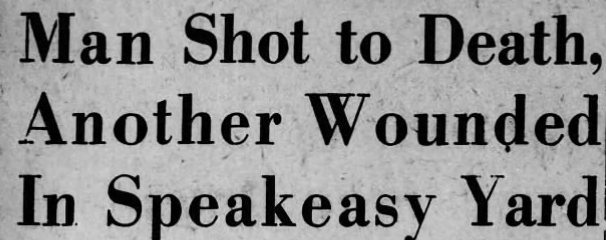
July 11, 1932
Leads Dry Up
Investigators are now stumped and without a prime suspect.
Meanwhile, police interviewed Marco’s wife again. And again, she was little help. At the same time, investigators were examining a couple of bombings in the city. These incidents occurred earlier in the year and were thought to be connected to the murder.
The case goes quiet. Almost a full year until Pietro (Peter) Sirianni shows up again in October 1929. He was mysteriously shot in the leg and required treatment at the hospital.
Police questioned him, but he claimed it was a self-inflicted wound. Was this retaliation for the Pasco murder?
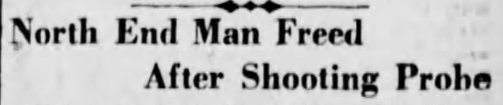
October 8, 1929
Still no closure, in March 1930, Marco’s case gets a mention as being one of the unsolved murders in Scranton. The article discussed the death of Taxi Cab driver John Lowry. Ralph Sloat shot him to death in February 1929.
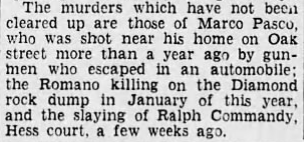
March 31, 1930
Eventually, the case ran cold and no one was ever held accountable for the death of Marco Pasco. While Marco was involved in several violent altercations, murder is never the answer. His assailants remained free except for their guilty conscience.
Elizabeth Pasco passed away in 1958 in New Jersey. Did she take any secrets to her grave? Did she know the assailants?
Legacy
Marco’s legacy lives on through his nine children and their families, most of whom moved out of Scranton. Many moved back to New Jersey and others to Cortland, NY or South Carolina. My guess is that they are painfully aware of Marco’s violent past, including his eventual murder.
Today, Marco Pasco’s death remains one of the many unsolved murders in Scranton.
So, what do you think was the motive for his murder? Was it work related? Was it retribution for another incident? Was it the work of the Black Hand who was trying to extort him? Unfortunately, we may never know.
 Exploring historic crimes in NEPA
Leave a comment