
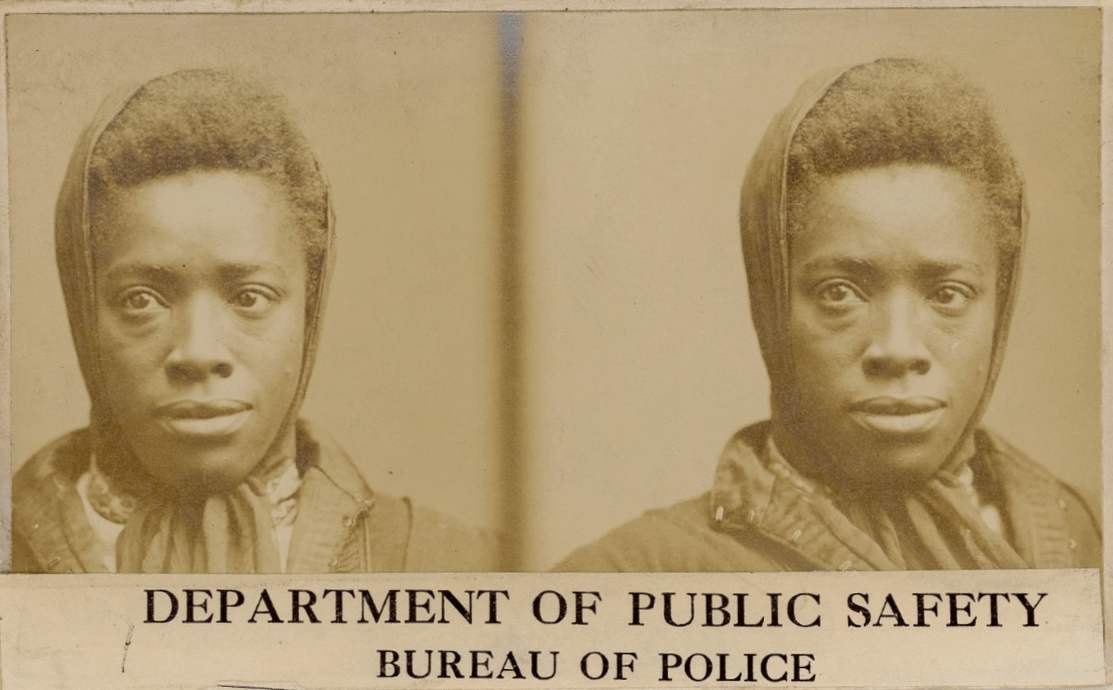
Crime in Northeastern Pennsylvania was not only perpetrated by men. Many women were also part of the criminal element, including the infamous Mary Gregory. She ran under many aliases, and I added another, Red Light Mary.
In the Beginning
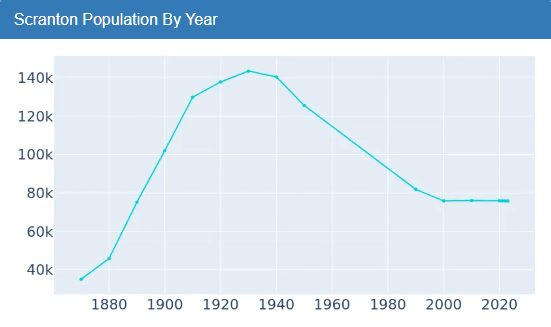
Mary was born in Roanoke, Virginia, in 1880. She moved to Scranton with her parents, Richard Gregory and Delilah Smith, in 1893 as Scranton was just beginning to boom.
Richard was a “cabman,” essentially, an early-day taxi driver. His vehicle was a horse-drawn carriage, likely what was then known as a “Hansom Cab.”
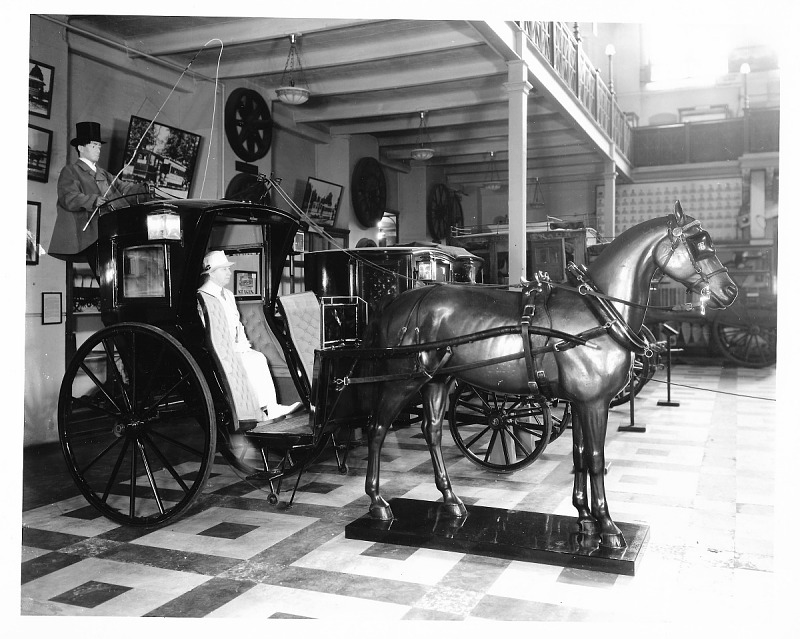
Smithsonian Institute
Delilah would become one of the founding members of the Shiloh Baptist Church. She served as Vice President of the Ladies’ Auxiliary Society. Initially, the church was located at 117 Penn Avenue. It would later change names and become known as the Pine Street Baptist Church.
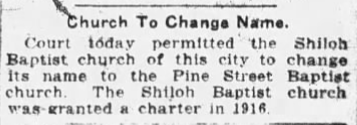
March 13, 1918
Early Days
Not long after their arrival, Richard was involved in kidnapping. A man had forced a woman into Richard’s cab, and they took off with the woman screaming. Richard was arrested as an accomplice in the kidnapping. The outcome is unknown.
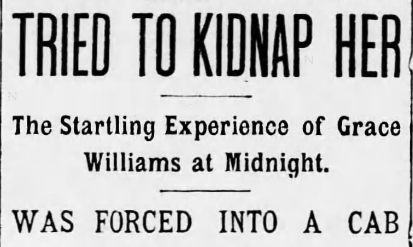
June 9, 1899
The Gregorys lived near the corner of Penn and Vine during the 1900 census. Richard was still listed as a “coachman,” and Mary, at 18 years old, was listed as a servant.

Mary’s First Arrest
Mary’s first brush with the law came in May 1905. She had just turned 23. She was arrested for stealing $4.30 and a gold ring from a man who was visiting a home where Mary was employed as a “servant.”
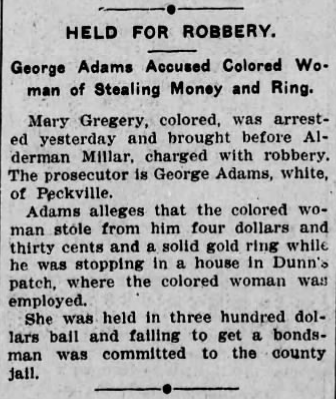
May 5, 1905
Scranton’s Tenderloin District
The Tenderloin District in Scranton was bustling in the early 20th century, and Dunn’s Patch was one of the areas known for its seedy activities. It was located in the area of South Washington Avenue and Hickory Street in South Scranton. The area was named after its owner, Civil War veteran Alexander Dunn.

Numerous reports of “disorderly houses,” drinking, drugs, fights, and “orgies” were reported in Dunn’s Patch from 1900 to 1908.
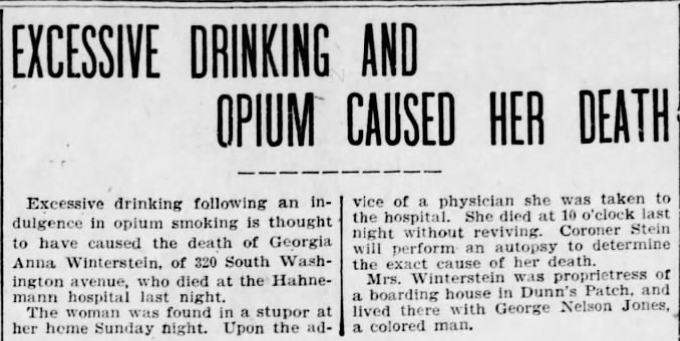
May 16, 1905
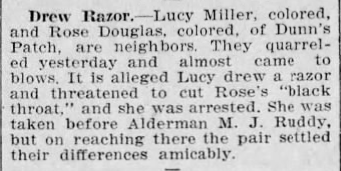
December 6, 1905
The City finally took action in 1908. They declared that the area needed to be dismantled. They took action to condemn properties and move others.
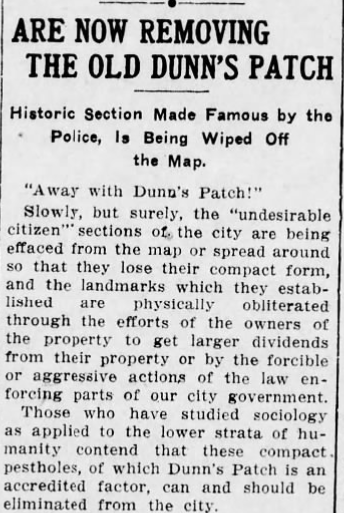
September 18, 1908
Mrs. Tarry
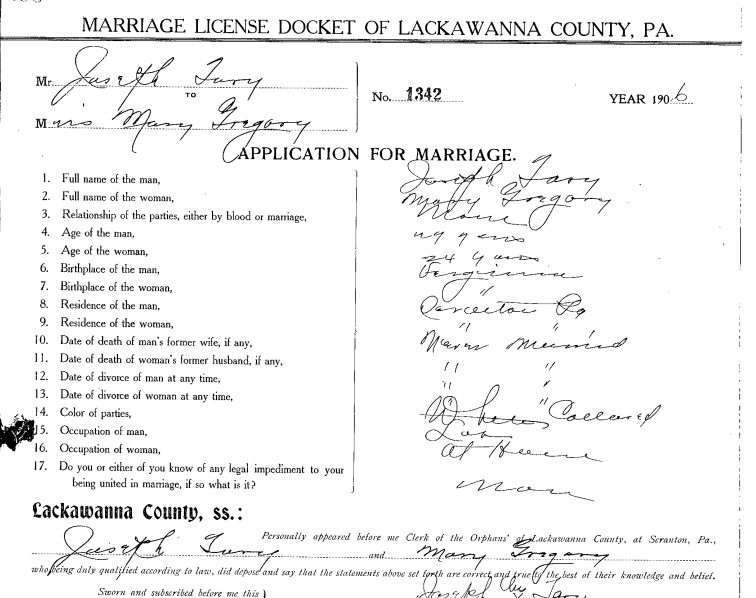
A year after her first arrest, on September 10, 1906, Mary would wed Joseph Tarry. Joseph was also born in Virginia. His race was not ascertainable. Their marriage application listed him as white, but newspaper articles listed him as “colored.”
Joseph was no stranger to trouble. Just four years prior, he borrowed the wagon from a man but never returned it. He was arrested for stealing the wagon and forced to pay restitution and fines.
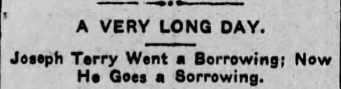
September 29, 1903
Mary Continues Her Ways
Marriage didn’t deter Mary from criminal behavior. Within five months of tying the knot, in February 1907, she was arrested for trying to pick the pocket of H.E. Meyers at a saloon on Penn Ave.
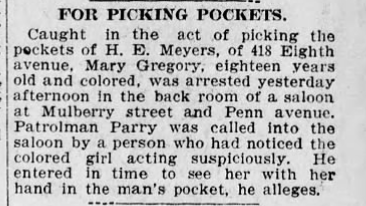
February 19, 1907
Domestic Abuse
By 1909, Joseph and Mary are living on Raymond Court in Downtown Scranton. This, too, was a troublesome area within the city.
The two got into a fight, and Joseph was accused of domestic abuse. He was charged with beating Mary and was brought before the magistrate to stand trial. Mary was initially a no-show at trial. Joseph vehemently denied the charges, and without Mary present, Judge John T. Howe couldn’t go further.
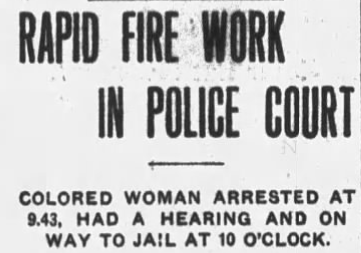
November 22, 1909
The judge requested that Mary be brought in to testify. Within 15 minutes, a “diminutive colored woman” entered the courtroom. The reporter’s account of the proceedings tried to capture Mary’s southern accent.
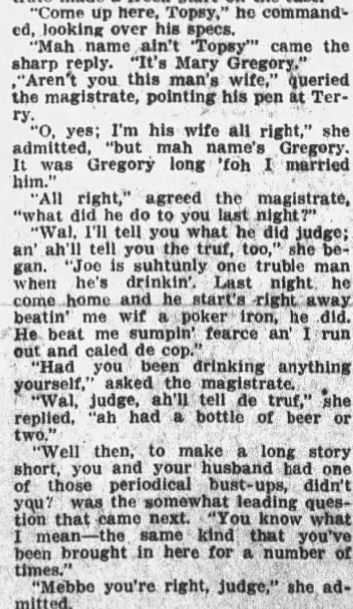
November 22, 1909
Mary claimed that Joseph beat her often, but the judge seemed to be familiar with Mary’s questionable past.
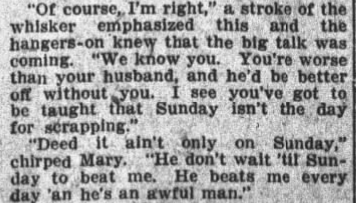
November 22, 1909
The sly judge set a trap for her. He asked if she was afraid of Joseph, knowing the answer. When Mary said she was, he offered “free protection.” Either pay $5 or spend 30 days in jail.
Joseph was also given the option of paying a $3 fine or spending 15 days in jail. When he scraped his pockets, he could only come up with $2.30. The judge reduced the fine under the condition that Joseph doesn’t try to get Mary out of jail any sooner.
Joseph snarked, “Betcher life I won’t.” Adding, “Ah’h sorry she ain’t goin’ up foh six months. Seems like she’s crazy any moh – I kain’t do nuthin’ with ‘er.”
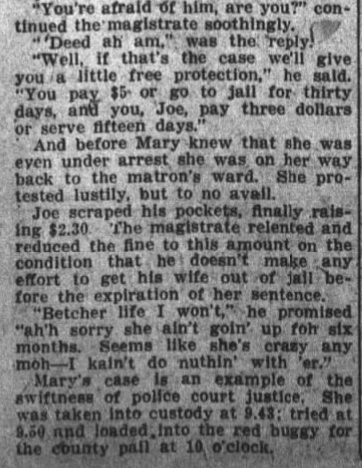
November 22, 1909
Drunk and Disorderly
Less than a year later, Mary got arrested for being drunk and disorderly in August 1910.
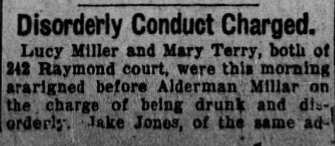
August 2, 1910
This meant that during the census on September 25, 1910, Mary was listed as being in jail at the Lackawanna County Prison.
One interesting note is that it listed that she had two children, but neither was living at that time. She was married for four years, which lines up with her marriage to Joseph.

Suicide Attempt
Just months later, in November 1910, Mary is placed in jail, arrested for being drunk and disorderly once again. While she’s awaiting her sentencing, she tried to commit suicide by sticking herself with a hatpin. It was reported that she tried to stab herself in her vital organs. She collapsed and was eventually brought to the State Hospital. They bandaged her wounds and inexplicably set her free.
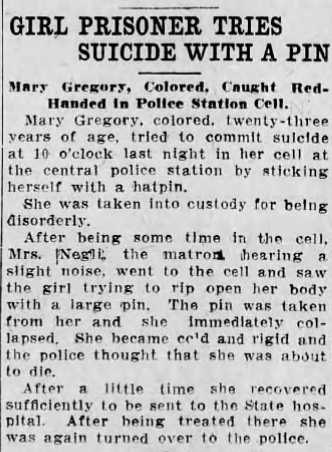
November 25, 1910
Back Again
The very next day, she’s back in jail. This time, it’s larceny. She tried to pawn a man’s watch, and she was caught.
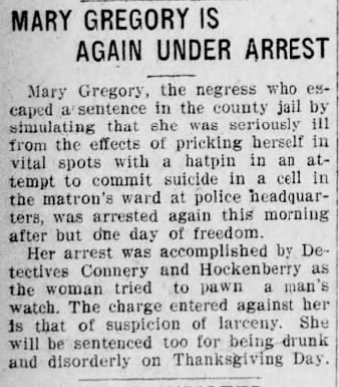
November 26, 1910
These charges earned her a mugshot, and we get a rare glimpse of an early 20th-century criminal. She’s listed at 4’7″ and just 110 pounds.
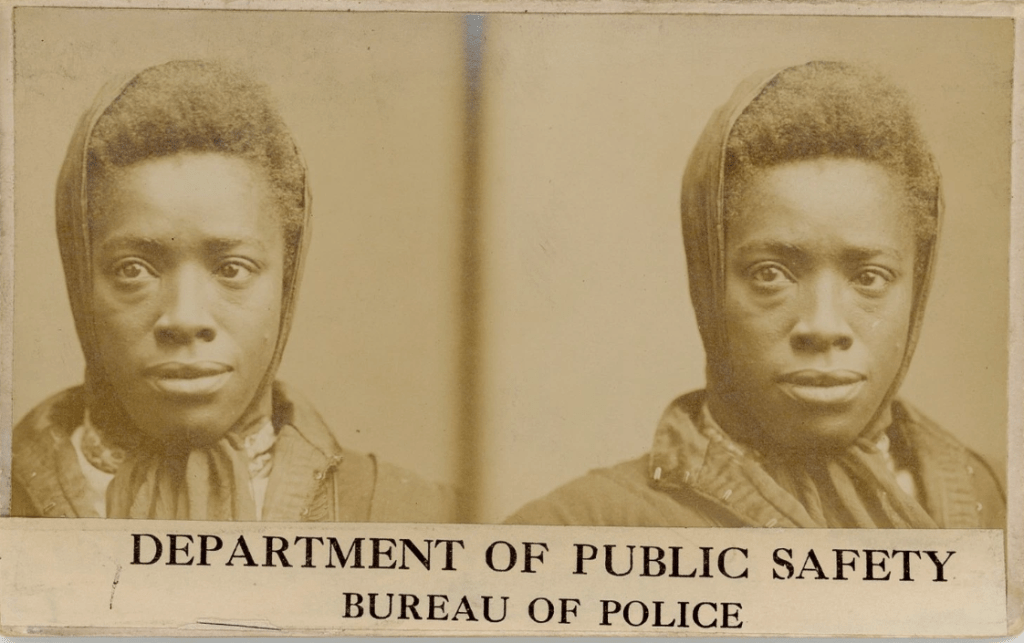
1910
Courtesy: Nick Petula
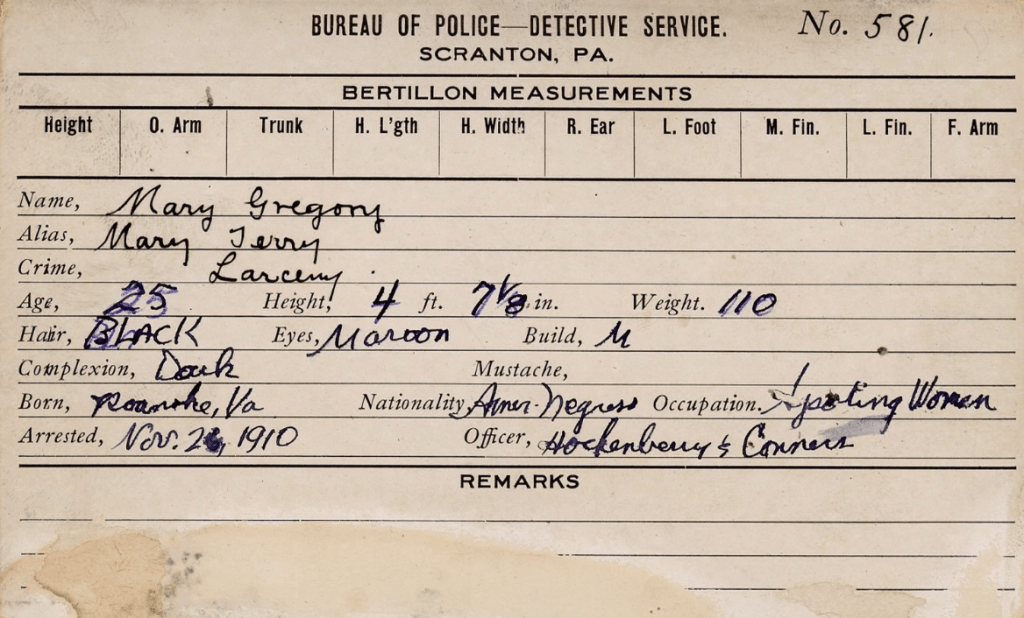
1910
Courtesy: Nick Petula
She was eventually sentenced to 30 days in jail for her drunk and disorderly conduct, but the larceny charges were dropped. The man whose watch was stolen was not willing to press charges, since she turned over the timepiece.
Mary was among many prisoners who were set free the day before Christmas. Her sentence was cut short by just a day or two, but she was able to celebrate Christmas with her family.
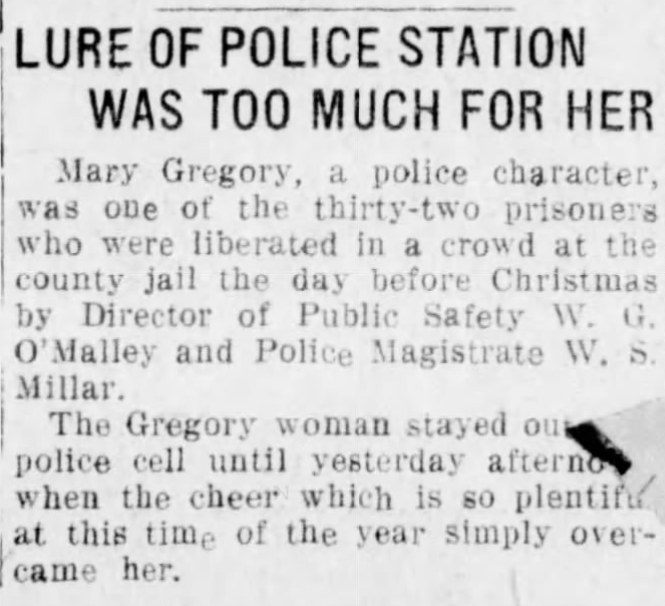
December 27, 1910
More Drinking. More Suicide Attempts.
Mary was back in jail in May 1911. This time, she was acting erratically on Scranton Street in West Scranton. Clearly, alcohol was involved. Newspaper reports vary on this incident, but the more detailed report came from the Scranton Times.
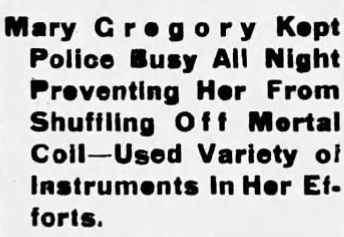
While waiting in the holding cell overnight, she tried to commit suicide multiple times. Her actions landed her on the front page of the Scranton Times.
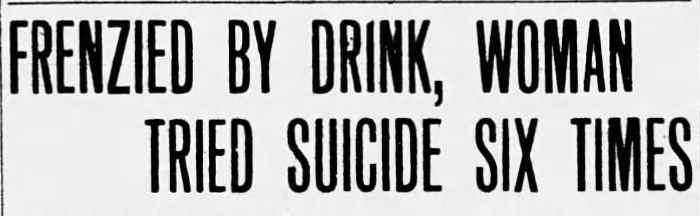
May 10, 1911
It was reported that Mary had pretended to faint. When the matron went to get her a glass of water, Mary pulled out her hatpin and slammed it into her left breast. As she did, she yelled, “Goodbye! The Lord has sent for me and I’m on my way to join the angels.” The matron rushed in and found it to be just a superficial wound. Mary was saved by her corset. The pin bent and only scratched her skin. After that, Mary was moved to a padded cell.
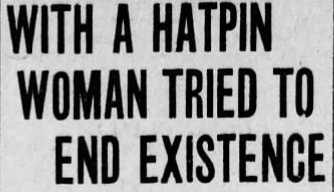
May 10, 1911
As soon as she was put into the cell, she grabbed a safety pin from her pants and tried to stab herself in the throat. The guard saw her and disarmed her. Then she tried again with a hairpin, followed quickly by a neck brooch. Each attempt was thwarted by the guard. Finally, she tried to drink a cup of formaldehyde before the guard knocked the cup from her hands.
May 10, 1911
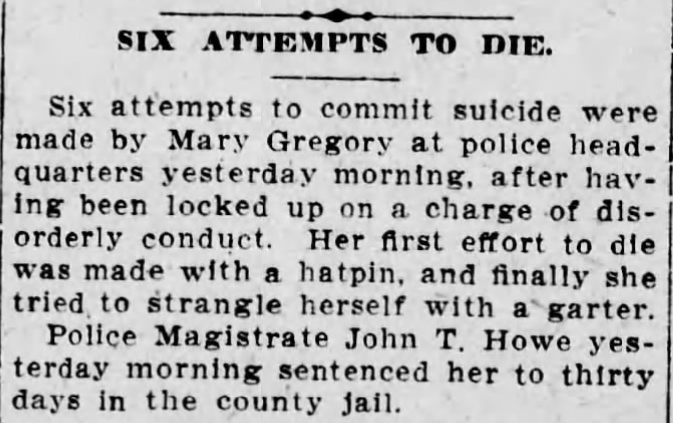
By this point, Mary was exhausted from her attempts. It was two o’clock in the morning, and she finally positioned herself in her bunk. Just when the guard thought all was well, she heard a noise. She came running in to see that Mary had removed her garter and tied it around her neck, with the other end tied to the jail cell. Mary had thrown herself backwards in an attempt to strangle herself. The matron quickly cut the cloth and released her.
May 11, 1911
When she faced the magistrate the next morning, she was ragged from the sleepless night. The Times reporter said she smiled when the judge “gave her permission to spend thirty days in jail.” He stated that it was a vacation from her “arduous duties in the backrooms of Penn Avenue and other parts of the Tenderloin.”
Domestic Troubles Continue
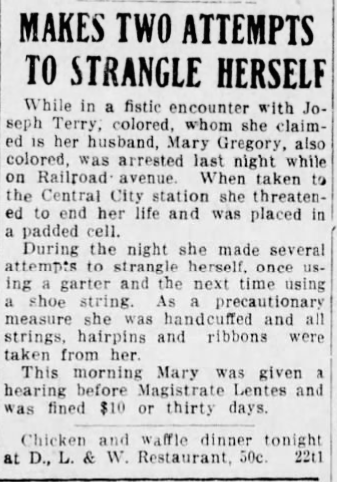
Mary and Joseph get into another argument just two months later. This time, in July 1911, they were on Railroad Avenue when taken into custody.
In her cell, Mary again tries to commit suicide. She was sentenced to a $10 fine or another 30 days in jail.
July 22, 1911
Thief!
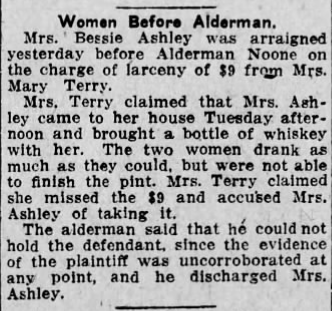
The tables turned in December 1911. This time, Mary invited her friend Mrs. Bessie Ashley over for a drink. The two drank almost a pint of whiskey before Mary accused Bessie of stealing $9 from her. In court, the charges didn’t hold up. Bessie was released.
December 28, 1911
Stolen Wallet
The next week, on January 4, 1912, Mary was accused of stealing George Spencer’s wallet. This Tribune reporter made sure to mention that Mary was well-known to the police. So much so that they had “memorized her age, birthplace, occupation, and other facts” about Mary.
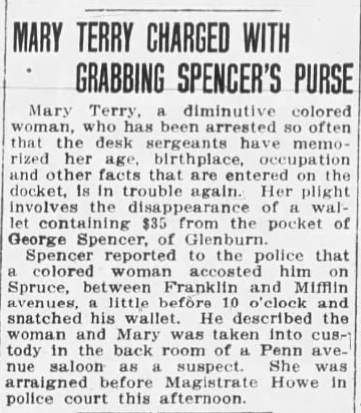
January 4, 1912
“A Real Specialist”
A week later, Mary is once again stopped for being publicly intoxicated. When she searched at headquarters, police found a man’s gold watch. Superintendent Lona Day commented. He said that he didn’t think she had acquired it legally.
January 12, 1912
“Mary is a real specialist,” he claimed. He added that, “she picks up white men in the tenderloin resorts, and after she goes through them for their money and valuables, they’re so ashamed that they won’t appear against her. We’ve had several strong cases against her, but the victims wouldn’t stand up.”
Mary Campbell?
A marriage license was issued in September 1914 for Charles Campbell and Mary Terry. I believe this was Mary, but I can’t find any other supporting documentation. Mary later uses the alias Mary Campbell, but I am not sure this union ever took place.

September 23, 1914
Oh, Mary!
She reappears in February 1915 as Mary Terry. Still, she’s well-known in the legal system, as the Scranton Truth points out. They stated that Judge O’Neill has seen her “enough times to call her by her first name.” Yet somehow, Mary seems to be oblivious to her notoriety.
She’s picked up again for “frisking a gentleman caller at her home.” She admitted to stealing $4 from the man. The judge asked her if she had ever been in court before. Mary confidently stated that she had not, and the courtroom burst out in laughter.
The judge must have been amused and in a good mood. He suspended Mary’s sentence! Mary quickly turned and left the courtroom before he could change his mind.
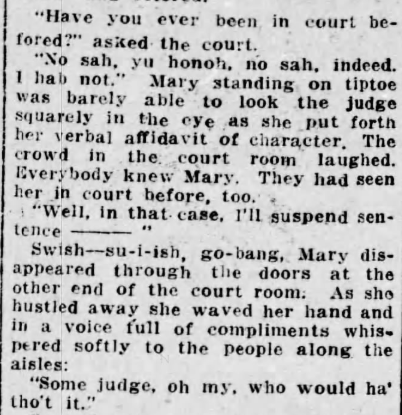
February 27, 1915
Disorderly Conduct
During a sweltering heatwave, Mary was picked up once again for being disorderly. While at the police station, she was overcome by the heat and taken to the State Hospital for treatment. She was sentenced to 30 days in jail.
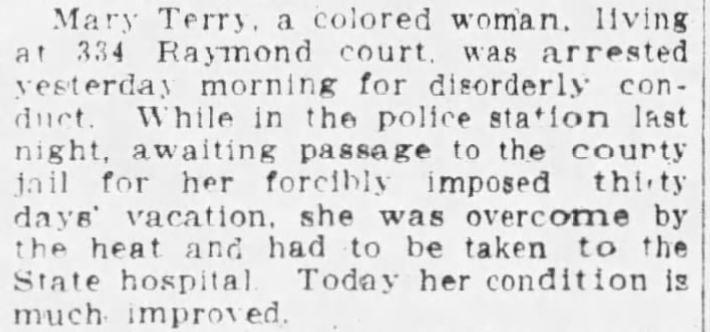
July 13, 1916
No More Mr. Nice Guy
Less than a year later, Mary is back in front of Judge O’Neill. It seems that Mary had picked the pocket of another man. Judge O’Neill was fed up. He allegedly previously told Mary to remain trouble-free or he would send her to the big house – Cherry Hill Prison, aka Eastern Penitentiary in Philadelphia.
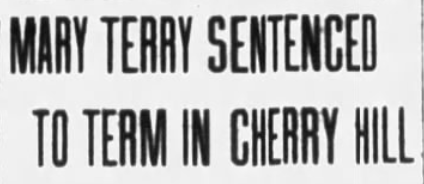
February 24, 1917
He made good on his promise and sentenced her to up to 13 months.
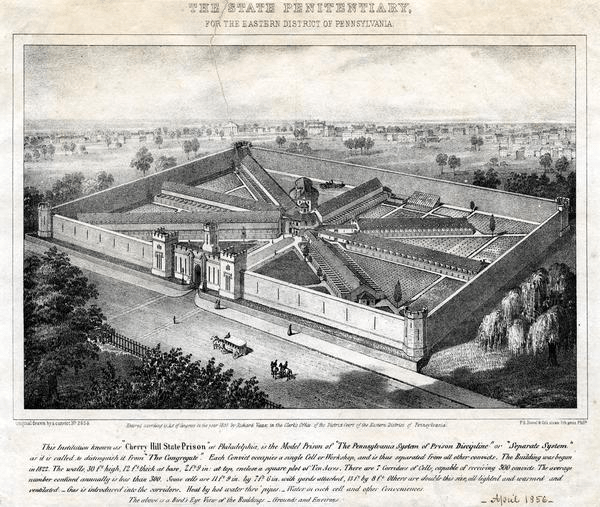
By this time, Mary’s intake record in Philadelphia lists her as having multiple aliases. It appears that she has used the last names of Terry (Tarry), Gregory, Campbell, White, and Whitlock.

February 24, 1917
Quick Turnaround
If she had served her entire 13-month sentence, she would have been released in March 1918. Just two months later, on May 4, 1918, she pleaded guilty to larceny again, this time in Wilkes-Barre. She picked the pocket of Frank Pechunis on State Street. The cash was ultimately returned, so Mary was released, under the condition that she leave Wilkes-Barre.
Her accomplice in this heist was a man named Andrew Searles.
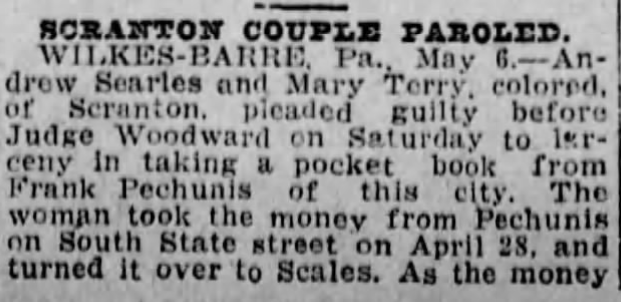
May 7, 1918
Back In Scranton
Apparently, Mary heeded the requirement to leave town. Back in Scranton, she’s picked up just five months later. This time, Joseph Gardner is the victim. Mary stole $66 from the man.
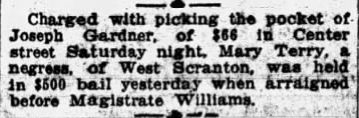
October 14, 1918
Mary Johnson
In December 1918, Mary was using the name Mary Johnson. She was picked up for stealing sixty dollars from Hopkins Weatherhog.

December 24, 1918
Back to Cherry Hill
Mary is guilty of two more counts of larceny, and Judge O’Neill is increasing the penalty. He sentences Mary to three to five years in prison. It’s back to Cherry Hill for the repeat offender.
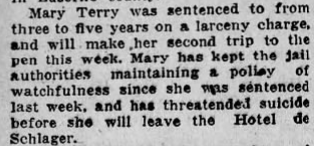
February 13, 1919
Her prisoner intake record adds two more names to her long list of aliases: Mrs. Roy Munroe and Mary Johnson. Note that her mother is listed as Delilah Burke. It appears that Richard Gregory passed away, and Delilah remarried; however, I was not able to locate a marriage record.
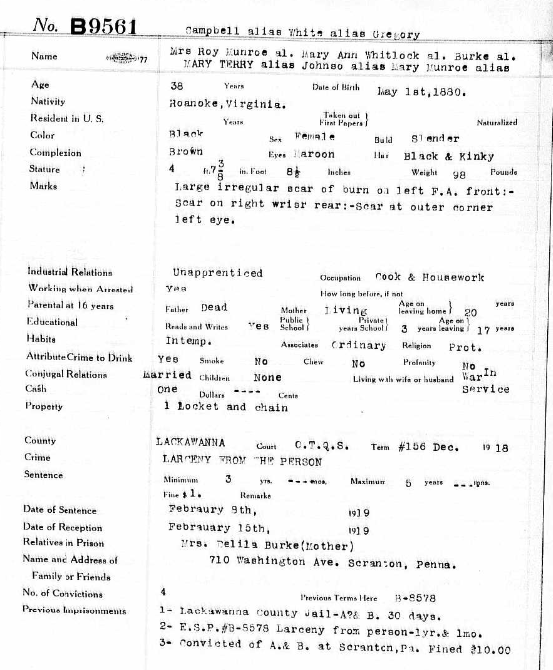
February 15, 1919
While I can’t make a definitive correlation, there was a Roy Monroe, who was born in Iowa and lived in Wilkes-Barre in 1920. Roy was arrested several times and spent time in prisons throughout the country. I can’t find a marriage record, but was Mary in a relationship with him?
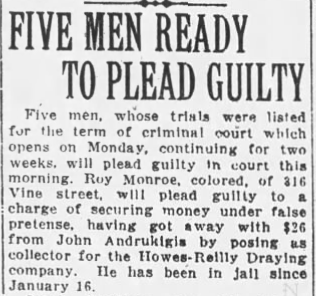
January 25, 1919
Application for Parole
In February 1920, Mary is still in prison in Philadelphia. Her attorney is seeking a pardon on her behalf. Delilah pleads her case, saying that she believes she’s been taught a lesson and that she “will be a good girl if allowed to come home.”
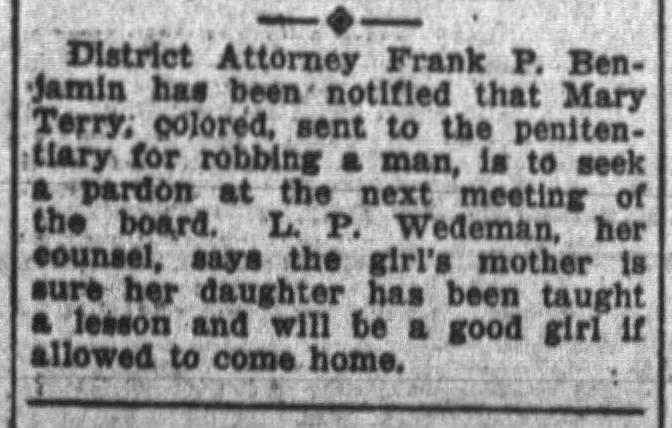
February 11, 1920
Moved to Rockview
The pardon was unsuccessful. Over a year later, Mary was still in Philadelphia, but she was moved to Rockview State Prison in Centre County on May 24, 1921. Once again, the list of aliases continues to grow. This time, her intake sheet adds Mary Burke, the surname of her mother’s new husband.

May 24, 1921
While there, a massive riot broke out in the Western State Penitentiary in Pittsburgh. It likely made for tumultuous times in prison.
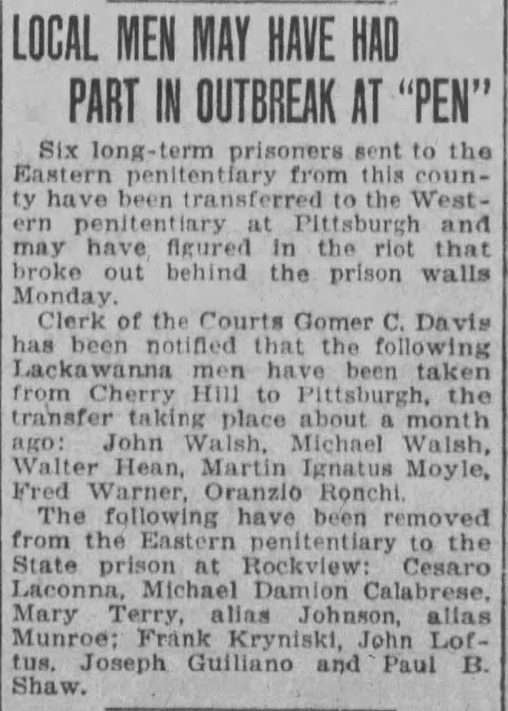
July 20, 1921
Released and Remarried
Mary was released from prison, presumably in February 1922, after serving her minimum of three years.
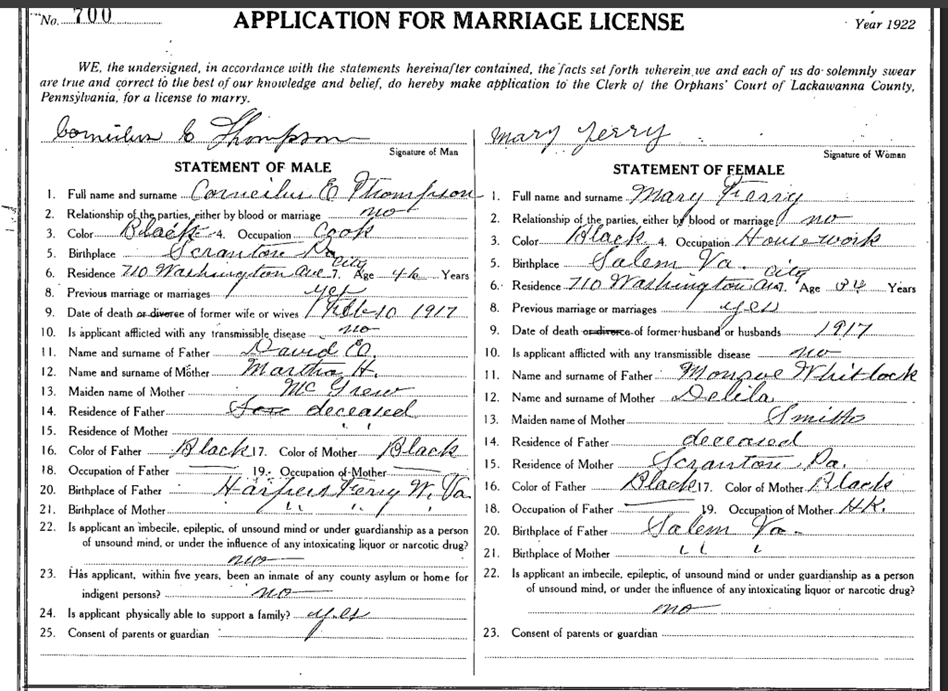
On April 23, 1922, she remarried Cornelius “Neil” E. Thompson. She listed her father as Monroe Whitlock. Her mother is listed as Delila Smith. This points to Monroe as her biological father and Richard Gregory as her stepfather. I was able to find a Monroe Whitlock who died in a tragic train accident in February 1884 in Norfolk, Virginia. Could that have been Mary’s father?
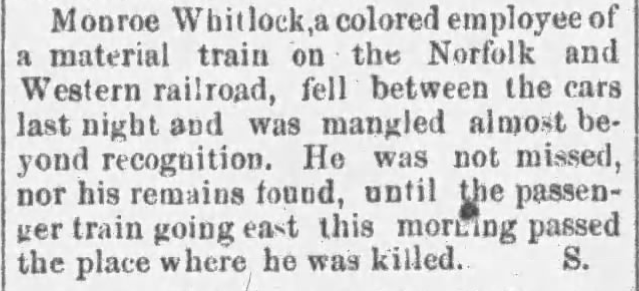
February 29, 1884
The marriage application also indicated that Joseph Terry died in 1917, although I was unable to locate a death record for him in Pennsylvania. Could he have died in WWI? Did he move out of the state?
Accident
The marriage to Neil didn’t appear to last very long. On December 20, 1924, Mary shows up again as Mary Terry living at 328 Moir Ct. This time, she was struck by a car while crossing Wyoming and Vine the night before.
The man who hit her, Ambrose Prestwood, claimed he was parked at the curb and fixing one of his headlights. Three witnesses testified that Prestwood’s car was involved in the accident. There’s no outcome of the incident.
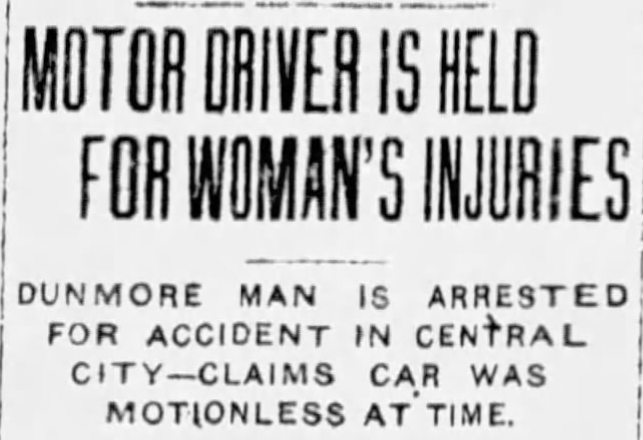
December 20, 1924
Mary was treated and released for her minor injuries.
Fairchance, PA
The next time Mary shows up, she’s listed as Mary Gregory in 1933 in, of all places, Fairchance, PA. Yep. The town that got its name from providing people with a fair chance is where Mary would spend her final days.
She arrived in the town about a year prior. Mary’s mother was still in Scranton, but many of her aunts and uncles lived in Fairchance. It’s a small town of about 1,500 people just north of the border of Morgantown, West Virginia.
Fight
It didn’t take long for Mary to hit the papers. She allegedly got into a fight with another woman in July 1933.
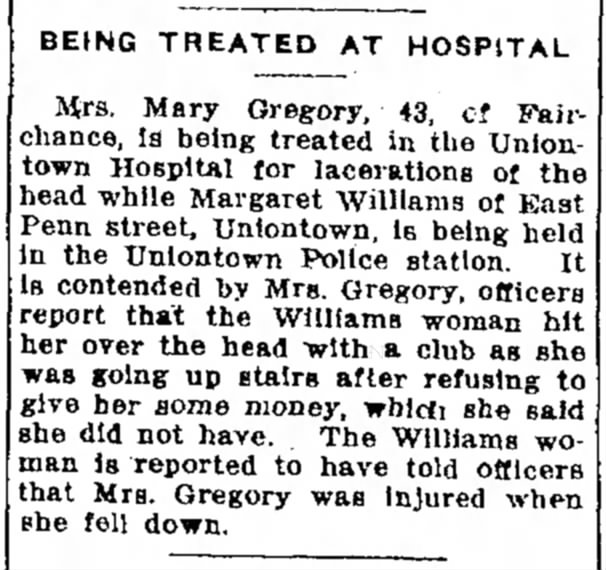
July 3, 1933
Dies in Bed
Shortly after that incident, Mary was found dead in her bed on August 14, 1933. She’s listed as living with “Uncle Jim” Johnson. I can’t find a connection to Uncle Jim, but I do know that Mary’s mother had a sister who married a man named Johnson. Could that be Uncle Jim?

August 15, 1933
Mary’s official cause of death was listed as “acute alcoholism.” Her death certificate refers back to her parents, Monroe Whitlow (Whitlock) and Delilah Smith. Delilah signed off on the death certificate ending Mary’s struggles with alcohol.
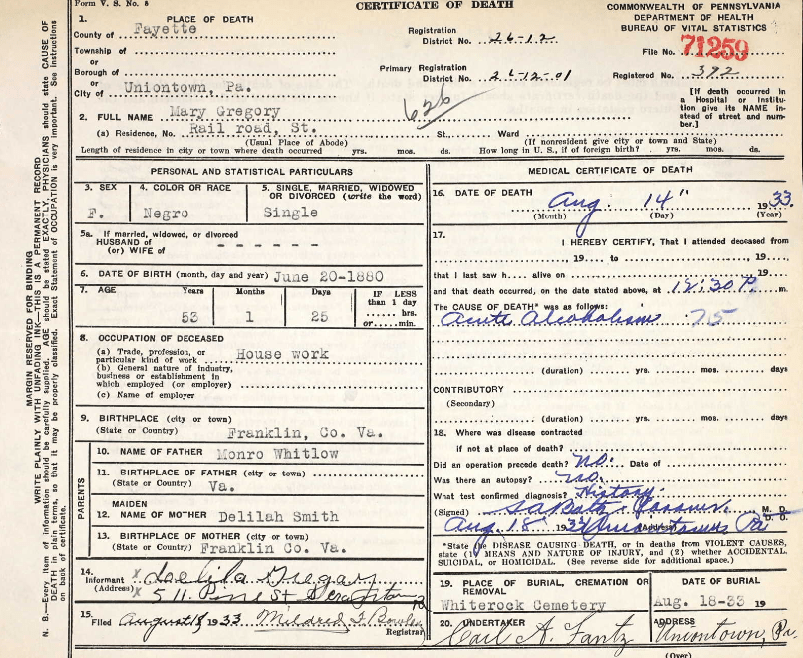
Delilah would pass away in 1940, and there would be no immediate descendants – only her siblings in Western PA and Ohio.
Over a hundred years ago, people struggled with alcohol addiction. The sickness impacts so many in society. You have to wonder, what causes the addiction? Did losing her father at an early age impact her? Was her stepfather a loving father figure?
Her mother likely struggled to keep her only daughter safe. The move to Fairchance was probably Delilah’s last-ditch effort to help. She likely wanted to remove her from her corrupted environment and surround her with family. Unfortunately, it was too late.
RIP Mary.
 Exploring historic crimes in NEPA
Leave a comment